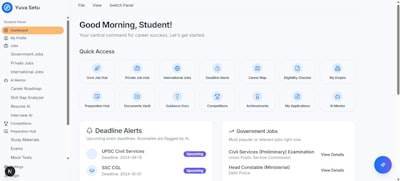
A new employee's first day shapes both productivity and how they perceive the company. An intranet with smart onboarding should answer questions, provide access to tools and connect people without requiring the technical team to step in at every stage. The real question is not whether the platform offers many features, but whether any worker, regardless of digital skill level, can complete tasks confidently and independently. This vision requires user-centred design and a technology architecture that makes it possible.
An intranet is often mistaken for a document repository. Uploading manuals and policies does not create an onboarding experience. New employees face scattered links, complex credentials and ambiguous messages. As a result, they call support, ask a colleague or simply give up. To avoid this pattern, smart onboarding must guide people from minute one: introduce the team, show relevant processes, remind them of training and stay with them until they become autonomous.
A good system combines three layers. The first is a human-oriented interface, with menus that show only what matters, step-by-step assistants and contextual help. The second is automation, which removes repetitive tasks such as requesting access, confirming reads or assigning courses. The third is artificial intelligence, able to answer questions, summarise policies and suggest actions. Easy does not mean simplistic; it means reducing the effort required to perform a task to the absolute minimum.
This is where custom software makes the difference. A generic solution forces your company to adapt its processes to the tool. A custom application does the opposite: it starts from the actual workflows and builds an experience that reflects them. Q2BSTUDIO works with HR and operations teams to model those flows, integrates Active Directory, Microsoft Teams, SharePoint, ERPs and other platforms, and validates every version with real-user testing. The result is an intranet that feels like a native tool, not a standard product.
The user experience is not aesthetics; it is function. During onboarding, a new employee does not know where to look. Every screen must answer one question: what do I need to do now? Progress indicators, plain-language explanations and demonstration modes reduce the fear of making mistakes. Q2BSTUDIO runs usability tests with people of different digital skill levels and adjusts the flows until non-technical staff feel able to act on their own.
Artificial intelligence is not a decorative extra. An assistant can explain a policy in plain language, remind an employee which form to submit or summarise a forty-page manual. AI agents can go further: create accounts, send alerts, suggest training or update data in corporate systems. To make this reliable, models need access control, encryption and supervision. Q2BSTUDIO deploys these capabilities on AWS/Azure cloud architectures with VPN tunnels and private endpoints when clients need to protect internal data.
Governance of AI is another key point. Models that generate answers must be supervised, especially when they affect personnel decisions or administrative procedures. In certain cases, a human should validate the result before it is executed. This is solved with approval workflows, activity logs and the ability to disable an automatic action at any time. Trust in AI is built through transparency and clear limits.
Cybersecurity is non-negotiable. An intranet manages personal data, salary information, performance reviews and access privileges. Any breach can affect the whole organisation. Therefore, the solution must include roles, per-user permissions, audit logs, protection against leaks and regulatory compliance. Security cannot be a later patch; it must be present from the database design to the cloud deployment.
Information also becomes a competitive advantage. By integrating Business Intelligence and Power BI, HR leaders can visualise time-to-productivity, completion of welcome tasks, frequent questions or satisfaction levels. These data help identify bottlenecks and improve the process continuously. An intranet with smart onboarding is not a project that ends on launch day, but a system that learns and optimises itself.
For non-technical staff, the difference is felt daily. Instead of searching through folders or asking in a general chat, the person finds information in context. Forms arrive with fields already completed, notifications appear at the right time and the system remembers pending items. This reduces the load on IT and HR, avoids errors and shortens the learning curve. Teams spend less time resolving incidents and more time creating value.
Integration with the technology ecosystem is one of the most common challenges. Many companies already use an ERP, a CRM, learning platforms or HR tools. A smart intranet should not ignore these systems, but connect to them through APIs and connectors. Q2BSTUDIO applies modern integration patterns that avoid duplication and let information flow between systems without exposing unnecessary data. The better the intranet is connected, the easier it is for a non-technical user to complete tasks without jumping between applications.
Organisational change also matters. An easy-to-use intranet will not succeed if people do not know its value. For this reason, launch should be accompanied by internal communication, department champions and short training materials. Technology makes the experience possible, but people are the ones who adopt it. Designing with the user in mind and offering support during the first weeks greatly increases the chance that the project becomes a habit.
Finally, usability depends not only on the interface. It depends on a clear information architecture, the automation of intermediate steps and the quality of AI-generated answers. A good search engine does not replace a well-designed process. Combining both is what turns a traditional intranet into an intelligent onboarding system.
In summary, an intranet with smart onboarding must be accessible to non-technical staff, while remaining technically robust. Q2BSTUDIO, as a software development and technology company, provides a comprehensive vision: custom software, AI, cybersecurity, AWS/Azure cloud and BI/Power BI. If you want new employees to be productive from day one, and your internal team to stop fighting fires, the next step is to evaluate your case with a technical partner that understands the business.