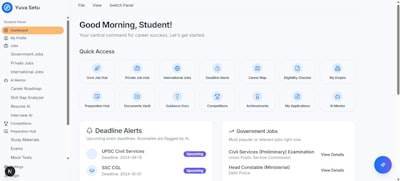
The corporate intranet is no longer a simple document repository. In 2026, organizations are asking whether it can evolve into an intelligent system that supports people from their first day. The answer is yes, as long as it combines the right technology, custom software development, artificial intelligence, and a clear view of internal processes. The question is not whether it is worth it, but how to do it without ending up with rigid solutions that become obsolete in a few years.
Smart onboarding changes the new employee experience. Instead of a static handbook, the employee finds a personalized journey: what to do during the first days, who to contact, which tools are needed, and what the role expects. This evolution is not limited to automating administrative tasks; it also provides context, anticipates doubts, and connects the person with colleagues, mentors, or training resources at the exact moment. The intranet becomes a copilot, not a drawer.
For this evolution to be real, the intranet needs to understand the organization. An employee does not search for no reason: they search because they have a specific need. The better the integration with knowledge bases, policies, procedures, and people, the more useful the platform will be. This is where AI agents come in: they interpret questions, synthesize answers, and execute actions with security boundaries. The value is not in the chatbot, but in its ability to solve without friction.
The foundation of an evolved intranet is not only AI. The architecture of AI services and data must coexist with well-designed software. Many organizations make the mistake of buying a generic solution that does not fit their operations. The alternative is to build applications that adapt to the company's real workflows. Q2BSTUDIO is a software development and technology company that understands this need: it combines custom software, AI systems, and agile methodologies so that the intranet is not an IT project, but a business lever.
The quality of an intranet with smart onboarding is measured by the quality of its data. If the system does not know which project a person joins, which team welcomes them, or which permissions they need, AI will respond with generic information. Therefore, before talking about algorithms, information must be organized: create a unique data model for employees, profiles, roles, departments, and resources. Q2BSTUDIO applies product design methodologies to define that model with the client and avoid building technology on a fragile foundation.
AI should not be a black box. A practical approach is to deploy agents that act in specific domains: welcoming new hires, creating users, requesting equipment, validating documentation, or answering FAQs. Each agent has limits, rules, and human supervision when the action affects sensitive data. Q2BSTUDIO designs these flows with clear governance, so employees gain autonomy and the IT team retains control.
Infrastructure also matters. Cloud platforms such as AWS and Azure allow the intranet to scale according to the number of employees, usage peaks, and workload. Not every company wants to move all data to the cloud or keep everything on-premises. A hybrid architecture can offer the best of both worlds: cloud AWS/Azure services for elastic environments and secure connections with internal systems.
We are talking about people and personal data, so cybersecurity is a pillar. An intranet with smart onboarding manages contracts, IDs, bank details, and other confidential documents. Any breach erodes trust and can lead to penalties. That is why Q2BSTUDIO integrates access controls, encryption, auditing, and penetration testing during development phases, not as an afterthought.
The visible result is measured with data. To know if the evolution is working, indicators are needed: average onboarding time, milestone completion, satisfaction level, or time spent searching for information. BI and Power BI tools make it possible to visualize that data in executive dashboards. By connecting the intranet to a semantic model, management can see which areas are moving faster and where bottlenecks exist.
An evolved intranet does not work in isolation. It connects with the corporate directory, the HR system, collaboration tools, and knowledge bases. With a well-defined API strategy, it is possible to open the intranet to all these systems without creating silos. Q2BSTUDIO builds these integrations with modern, maintainable patterns, so every area of the organization works with the same information in real time.
Evolution is not built in a single delivery. A realistic plan starts with an analysis of current processes and systems, continues with a minimum viable product that solves a specific problem, and continues with iterations that add modules, integrations, and agents progressively. Q2BSTUDIO encourages transparent collaboration at every stage, with functional demos and acceptance criteria defined before writing code.
The human factor is key. A smart intranet project is not adopted only because of technology. Employees need to be trained, understand what the system does, and trust that AI will not make critical decisions without supervision. Leaders must communicate why the tool changes and what benefits each person gets. The evolution is both cultural and technological.
A pretty interface is not enough. The intranet must become part of work habits. If employees have to remember that it exists, it will fail. True evolution means the platform appears when appropriate: in an email, a chat, a notification, or a pending task. This contextual presence is what separates a traditional intranet from an intelligent one.
Scale must also be considered. An intranet built for a small office can become unmanageable if the company grows quickly. The architecture must anticipate multiple business units, languages, countries, and changing organizational structures. Q2BSTUDIO designs modular platforms with environment separation and automated roles, so adding a new team does not require rebuilding the system.
Adding AI agents also raises responsibility questions. Who is responsible if an agent gives incorrect information? How is an automated decision audited? Companies need a clear framework for AI ownership and supervision. Q2BSTUDIO defines these mechanisms before implementation, establishing which actions are automatic, which require human approval, and how events are logged for traceability.
How much does this evolution cost? It depends on the starting point, the number of integrations, and the level of AI to be adopted. However, investment in an intranet with smart onboarding usually pays off by reducing unproductive hours in the early months and the workload of the human resources team. The return is not only economic: it also improves employer branding and talent retention.
In short, the intranet can and must evolve toward software with smart onboarding. The technology is mature: AI agents, private and public cloud, custom software, and data analytics. What many companies lack is orderly execution, technical judgment, and business focus. That is exactly where a firm like Q2BSTUDIO brings differential value: it combines expertise in AI, cybersecurity, cloud, and BI to turn the intranet into a strategic asset for the 21st century.