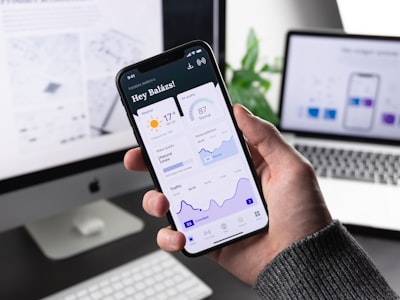
The question of whether a smart onboarding intranet can deliver a complete experience on mobile devices no longer has an ambiguous answer. Yes, it is compatible, but not simply by applying a responsive theme: it requires a product strategy, a suitable architecture, and a security approach that does not limit operability. Today's teams work from offices, warehouses, hospitals, or sales routes, and the onboarding process for new employees increasingly depends on being able to check tasks, resolve doubts, sign documents, and contact the team from anywhere.
Smart onboarding goes far beyond downloading a manual. It means turning a person's first days into a guided flow: account creation, mentor assignment, access to training, initial goals, regulatory documentation, and compliance checks. When that flow has to run from a mobile phone, the intranet must be fast, clear, and able to work in imperfect connectivity conditions. In this context, custom software offers a clear advantage over generic solutions because it allows every screen to be adapted to the company's real process.
A solid technical foundation starts with an API-first architecture. The mobile interface should not be a replica of the desktop view, but a lightweight client that consumes internal services for authentication, content catalog, task management, and notifications. With a well-designed API, the company can offer a native app, a PWA, or both. The PWA allows the intranet to be installed on the mobile home screen without going through traditional stores, and its cache layer enables offline work with later synchronization. This is essential for audits, logistics centers, or rural areas with limited coverage.
In addition, mobile compatibility requires rethinking the experience around tasks, not documents. Instead of showing a folder repository, the intranet should present the user with pending actions: approve a request, complete a course, review a policy, reply to a coworker. Push notifications, automatic reminders, and personal dashboards let employees know what needs their attention and when. For this to scale, technical teams often rely on Artificial Intelligence to classify content, recommend resources, and anticipate frequent questions.
Infrastructure also determines real compatibility. A mobile intranet depends on cloud services that guarantee availability and elasticity. Platforms such as AWS or Azure make it possible to deploy development environments, continuous integration, and load balancers adapted to the most demanding access patterns. At the same time, corporate data requires residency and encryption policies, so the architecture must combine public, private, or hybrid services according to risk. Q2BSTUDIO usually designs these solutions with AWS/Azure cloud and private tunnels that protect communication between mobile devices and central systems.
Cybersecurity is critical when the intranet is accessed from personal devices. In a mobile environment, it is necessary to apply multifactor authentication, role-based access control, short-lived sessions, and, in some cases, mobile device management or work containers. In addition, activity logging must be audited to comply with internal and external regulations. A well-implemented security policy does not hinder productivity; it makes it possible with confidence. In fact, employees appreciate that the company protects their personal data and clearly separates it from private applications.
For smart onboarding to be truly useful, the intranet should connect with the corporate ecosystem: active directory, HR, CRM, ERP, and collaboration tools. Automating onboarding and offboarding, synchronizing with Active Directory or Azure AD, and creating teams in Microsoft Teams are typical examples. The more connected the intranet is, the fewer doubts new employees will have and the less manual work internal teams will have to handle. Q2BSTUDIO implements these integrations with standard interfaces and proprietary APIs, avoiding duplication and maintaining a single source of truth.
AI agents are a central piece in the evolution of the intranet. These are not simple chatbots, but assistants capable of interpreting the context of a new employee: department, role, permissions, and completed documentation. With that information, an agent can suggest next steps, summarize lengthy policies, generate a personalized training plan, or help fill internal forms. Human supervision, traceability, and review of generated content are still necessary, but repetitive workload is significantly reduced.
Measurement is another pillar of mobile compatibility. An intranet used from mobile devices generates valuable data about adoption, response times, task completion, and bottlenecks. With a BI/Power BI layer, managers can see in real time the status of onboarding, activity levels by department, and the impact on productivity. These dashboards also help identify whether employees abandon a process at a certain stage and correct the experience before it becomes frustration.
Another important decision is to develop custom software instead of using only standard modules from a platform. Closed solutions can solve simple cases, but they often fail when specific processes, proprietary integrations, or security requirements from a particular sector appear. Custom software, combined with proven components, allows the intranet to become a competitive asset that evolves with the business. In addition, the company keeps the source code and does not depend on the commercial conditions of an external provider.
Q2BSTUDIO approaches this type of project with a senior team that combines software engineering, cloud experience, and knowledge of business processes. Its approach combines custom software with artificial intelligence, automation, and cybersecurity in a single development path. This means that the company does not have to coordinate multiple providers to get a secure and intelligent mobile intranet. From the discovery phase to production, success indicators are defined, technology is validated with prototypes, and tools are delivered so the internal team can manage the solution without constant dependence on developers.
The mobile experience must also address accessibility needs: adjustable font sizes, sufficient contrast, voice navigation, and designs made for hands and thumbs. An intranet that is not accessible creates exclusion and increases adaptation time. Including WCAG criteria in design and quality testing is as important as loading speed. Compatibility is not reduced to the screen; it is about ensuring that anyone can complete their onboarding with dignity and without barriers.
The future of the intranet with smart onboarding points to more conversational and predictive experiences. The mobile device becomes the employee's personal assistant: it tells them what to do, offers contextual information, lets them sign and approve in seconds, and connects them with colleagues or systems. Companies that adopt this vision before the competition will see a reduction in the learning curve, fewer administrative errors, and a significant improvement in team satisfaction. The necessary technology already exists; the challenge is to integrate it with coherence and focus on the business.
In short, the intranet with smart onboarding is indeed compatible with mobile devices, as long as it is designed with an integral strategy: API-first, PWA or native app, private or hybrid cloud, edge security, AI agents, integrations with corporate systems, and continuous measurement. Q2BSTUDIO supports this process with a practical, results-oriented approach, so that mobility is not a promise but a reality used every day by the people who bring the organization to life.