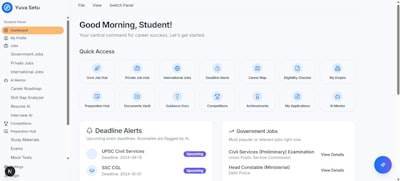
Internal communication works like a company's nervous system. When employees receive contradictory messages, search for information in several tools, or wait for answers that never arrive, productivity suffers and the workplace climate deteriorates. An intranet with smart onboarding turns communication into a structured process: everyone knows what is expected of them, where each instruction comes from, and how their work contributes to overall results. This transformation is not only technological; it is also cultural and operational, because it forces organizations to bring order to their decision flows.
The concept of smart onboarding goes beyond welcoming a new employee. It is a system that guides people from day one through automated tasks, contextual guides, relevant notifications, and progressive access to information. Applied to the whole organization, smart onboarding also helps teams that change projects, managers who take on new responsibilities, and professionals who need training in an internal process. The intranet therefore becomes an action-oriented communication platform, not a static digital archive.
The first tangible impact can be seen in talent acquisition. New employees often receive too much information in a short time: manuals, credentials, presentations, contacts. Without good orchestration, the learning curve lengthens and frustration grows. An intranet with smart onboarding organizes that content into phases, associates it with specific people, and tracks progress. The result is clearer communication, with fewer repetitive questions and a greater sense of control for both employees and their managers.
From a technical standpoint, the difference between a generic intranet and a truly effective tool lies in custom software. Standard templates impose a way of working and rarely fit real processes. Custom development makes it possible to model the intranet structure according to the organizational chart, approval flows, and departmental needs. Furthermore, a well-designed architecture supports future growth, because communication, training, and automation modules can be expanded without rewriting the entire system.
Artificial intelligence adds a predictive communication layer. AI agents can answer frequently asked questions based on internal documentation, summarize long conversations, recommend subject-matter experts, or generate response drafts. They can also detect bottlenecks, for example when a request has been stuck in the same status for too long. Integrated into the intranet, these agents act as an assistant that frees teams from repetitive tasks and improves response time. The key is to train models with reliable corporate sources and maintain human review for critical decisions.
Data visualization is another powerful driver for improving communication. With a Business Intelligence approach and tools such as Power BI, the intranet can display dashboards showing onboarding completion rates, waiting times, satisfaction levels, or objective progress. When data is embedded in the intranet, conversations shift from opinions to evidence. Leaders can detect problems before they become crises, and teams receive updated information without depending on impromptu meetings. Q2BSTUDIO builds Power BI dashboards that connect daily operations to strategy.
A smart intranet also requires a solid technical foundation. Deployed in the cloud, usually on AWS or Azure, it guarantees availability, elasticity, and disaster recovery. Cybersecurity is not an add-on but a requirement in internal communication: role-based access control, encryption in transit and at rest, audit logging, and robust authentication mechanisms. Organizations that manage sensitive data can also isolate AI services in private environments and set up secure tunnels to on-premises systems. This combination allows confidential information to flow without exposure.
The value of the intranet increases when it integrates with existing tools. Microsoft Teams, SharePoint, email, ERP, or CRM stop being information silos. Through APIs and events, the intranet publishes automatic updates, synchronizes profiles, and centralizes notifications. For example, a new employee's onboarding can trigger account creation, course assignments, and welcome messages from a single process. This automation not only saves time but also reduces the risk of errors and ensures that communication reaches the right person at the right time.
User experience matters as much as the underlying technology. Clean design, intuitive navigation, and a search engine with semantic capabilities make people want to use the intranet. Smart onboarding adapts content according to profile: a new employee in Madrid does not need the same information as an operations executive in Mexico, even when both use the same platform. Learning paths, automatic reminders, and collaborative spaces reinforce communication without creating noise, because each person receives only what is relevant.
Communication improvement must be measured to last. Indicators such as time to complete onboarding, intranet adoption rate, search feature usage frequency, or satisfaction in internal surveys make it possible to identify what works and what needs adjustment. An observability system shows how information flows between teams, which processes generate the most incidents, and which areas have lower engagement. With that data, management can make design and training decisions instead of applying blind changes.
Q2BSTUDIO approaches this type of project with a comprehensive perspective: process analysis, custom software development, artificial intelligence integration, AWS or Azure cloud deployment, cybersecurity, and Power BI dashboards. Its methodology starts with a discovery phase, delivers a minimum viable product within weeks, and continues with improvements based on real indicators. The goal is not to install a tool but to create a communication system that evolves with the organization and produces measurable results from the first quarter. Companies that choose this approach turn the intranet from a cost item into a competitive advantage.