In 2026, organizations in Valladolid face a challenge that did not exist a decade ago: creating real value from a growing volume of internal data. A modern corporate intranet must go beyond a simple document center. A knowledge graph adds a semantic layer that connects scattered information, gives context to searches, and allows artificial intelligence to act with judgment. Q2BSTUDIO is a software development and technology company working along these lines: building intelligent, integrated intranets aligned with business goals.
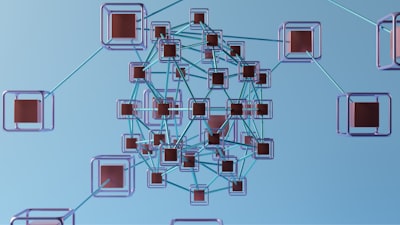
A knowledge graph organizes information as entities and relationships. Instead of storing a PDF in a folder and a record in a database, the system models that an employee belongs to a department, a project has an owner, a customer is associated with a contract, and a report supports a decision. That structure lets the intranet provide answers, not just links. The user does not need to know the exact file path; the system understands intent and queries the company's knowledge map. For a midsize company, this makes a huge difference in daily productivity.
The benefits are not only technological; they are operational. A newly hired employee can quickly understand who they work with, which tools are used, and what processes exist. A sales manager can see the relationship between opportunities, projects, and delivered services. Knowledge that used to live in emails or only in people's heads becomes represented and accessible to the whole organization. This reduces duplicated effort, speeds up issue resolution, and improves team experience.
To achieve this, standard intranet solutions often fall short. They need to adapt to each business's own processes: approval workflows, specific departments, internal naming, and concrete metrics. That is why investing in custom software development makes sense, a discipline in which Q2BSTUDIO builds software that fits the company's real context, not the other way around. An intranet based on a knowledge model requires this level of personalization from the initial design.
The next pillar is integration with systems the company already uses. A knowledge graph makes sense when it is fed by real data: ERP, CRM, project management, Active Directory, SharePoint, Teams. This is not about replacing those tools, but connecting them. Infrastructure can run in the cloud on AWS or Azure, and Q2BSTUDIO brings cloud architecture expertise to ensure scalability, continuity, and performance. This approach centralizes information without losing the functionalities teams already master.
The most interesting dimension of a knowledge graph intranet is its ability to incorporate AI. Language models, retrieval-augmented generation, and AI agents can answer questions, summarize documents, propose actions, and automate repetitive tasks. This is not a standalone chatbot: the agent consults the knowledge graph, understands context, and executes processes with human supervision when needed. For this to work, the intranet needs a well-modeled data layer and clean APIs, something many AI projects fail to prioritize but which here becomes the foundation.
Security is cross-cutting. When connecting internal systems with AI capabilities, new risks appear and demand a solid cybersecurity strategy. Role-based access control, encryption, audit trails, and personal data protection are essential. Also, when AI interacts with sensitive information, network traffic should be isolated through VPN or private endpoints. Q2BSTUDIO applies these principles in every deployment, with special attention to regulatory compliance and data governance.
Another necessary piece is observability. A smart intranet is not a black box; it should show what is happening: what people search for, what information is missing, where bottlenecks occur. Integration with Business Intelligence, especially with Power BI, allows building dashboards that explain how knowledge is used inside the organization. Q2BSTUDIO includes this perspective from the start, because continuous improvement relies on real data. Without measurement, any technology investment is hard to justify.
Q2BSTUDIO's methodology for these projects begins with an immersion in the company's operations. It does not start from a rigid template; it identifies workflows, data sources, and the metrics that matter. With that information, the team defines a phased plan, starting with a minimum viable product to quickly validate value. Then the team iterates: adding new sources, training agents, adjusting permissions, and evolving the knowledge graph progressively.
Companies in Valladolid have a competitive advantage: their size and proximity facilitate direct collaboration with the technology team. They do not need a large international consulting firm to solve a specific problem. Q2BSTUDIO offers a close approach, execution capacity, and business vision. For an SME or a growing company, the difference lies in having a technology partner that understands its reality and can translate that into software.
Moreover, a knowledge graph intranet has a strategic effect: it turns information into a reusable asset. Historical data from projects, customers, and processes makes it possible to train internal models, generate automatic reports, and detect business patterns. Instead of depending on isolated tools, the organization has a comprehensive view that facilitates planning and innovation.
A knowledge graph intranet is a significant investment, but perfectly manageable. The first step is a technical and strategic conversation: review what systems exist, what you want to achieve, and what resources are available. From there, Q2BSTUDIO proposes a realistic roadmap, with budget, timeline, and success criteria. The organizations that will advance most in 2026 will not be those that accumulate the most tools, but those that make in-house knowledge work for them.