In 2026, having an efficient corporate intranet is no minor competitive advantage. Organizations in Valladolid face an ever-growing volume of information: internal manuals, procedures, customer data, projects, indicators, and expert knowledge that often only exists in certain people's minds.
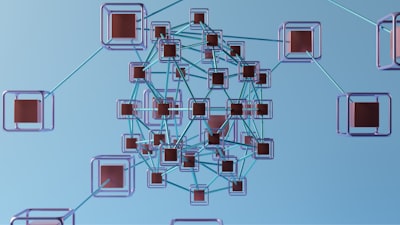
The concept of a knowledge graph intranet provides a structural answer. Instead of organizing information in static folders, the relationships between concepts, people, departments, systems, and processes are modeled. In this way, when an employee searches for an answer, the system does not simply return documents: it understands what they are looking for, who is asking, in what context they work, and what related information may be relevant. That semantic layer turns traditional search into a much more precise experience.
For companies in Valladolid, this evolution has concrete implications. The city's business fabric combines industry, services, logistics, and technology companies, with teams that need to collaborate across sites and with external clients. An intranet that uses a knowledge graph accelerates the onboarding of new people, reduces operational errors, and makes decision-making easier with more reliable data.
Q2BSTUDIO tackles this challenge from a technical and business perspective. The company does not simply deploy generic software; it designs a solution adapted to each organization through custom software. This is a significant difference: instead of forcing company processes to fit a tool, the tool is built around real workflows.
The technology model includes a graph database, a semantic indexing engine, and an artificial intelligence layer that combines large language models with retrieval-augmented generation, known as RAG. This combination lets workers ask questions in natural language and receive answers based on updated internal sources, with traceability and without meaningful hallucinations.
Furthermore, AI agents can act on the intranet to perform real tasks: create an incident, update a record, send a notification, or resolve a support request. Every action is logged and can be validated by a person before execution, providing security and control. Q2BSTUDIO integrates these capabilities with AWS/Azure cloud platforms, so the solution scales according to the number of users, the amount of documents, and the complexity of queries.
Cybersecurity is not a secondary module but a design condition. The Q2BSTUDIO team applies security principles from the start of the project: federated authentication with Azure AD or Active Directory, role-based access control, encryption of data in transit and at rest, access monitoring, API protection, and secure connections through VPN or Azure Private Link. This allows companies to use artificial intelligence without exposing sensitive information.
Another essential dimension is analytics. A knowledge graph intranet must make it possible to measure its impact, and BI/Power BI integration is key for that. With dashboards connected to data sources, management can see usage indicators, response times, employee satisfaction, automation rates, and costs per process. That level of visibility makes conversations with the CFO easier and justifies the investment with objective data.
Q2BSTUDIO's working methodology is designed to reduce risk. The first step is a discovery phase that maps current workflows, information sources, available integrations, and business goals. From there, a minimum viable product is designed in a short timeframe, usually a matter of weeks. This delivers value from the early stages and allows priorities to be adjusted with real data.
After launch, the solution does not become a closed project. Q2BSTUDIO provides a management portal so the client can update content, monitor AI behavior, adjust agents, and consult usage metrics without depending on the technical team for every change. This autonomy is one of the most valued factors by IT managers in medium-sized companies.
Use cases are varied. An industrial company can use the intranet to centralize the technical documentation of its machines and connect incidents with the knowledge base. A consulting firm can use it to find similar projects, internal skills, and methodologies. An HR department can automate responses to frequently asked questions and reduce administrative workload. In all cases, the knowledge graph provides context and precision.
In Valladolid, choosing the right technology partner is as important as the technology itself. Buying a license is not enough; the provider must understand the particularities of each company and be able to integrate the intranet with existing systems: ERP, CRM, document management tools, or legacy corporate software. The ability to build solid integrations with APIs is decisive for success.
Another key criterion is intellectual property. In many projects, the client company wants to own the source code, documentation, and operational manuals. Q2BSTUDIO works with a transparent model that delivers the code and allows the client to remain autonomous. In addition, pricing is clearly defined from the start, either as a fixed scope or a time-and-materials approach, depending on the project stage.
The results observed in this type of project usually appear within a few months. Information search time drops significantly, employee onboarding accelerates, repetitive tasks are automated, and teams can focus on higher-value work. From a financial perspective, return on investment is achieved in a relatively short time if the scope is well defined and there is internal sponsorship.
Having a knowledge graph intranet in Valladolid does not mean starting from scratch. Most companies already have systems that can become part of the new ecosystem. The question is how to connect them and how to add intelligence layers that make daily work easier. Q2BSTUDIO supports organizations in that transformation with a practical, secure approach focused on measurable results.