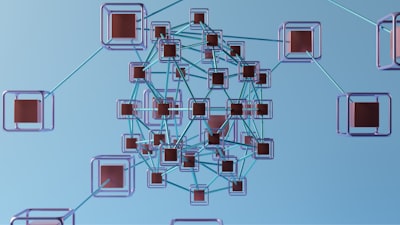
In 2026, a corporate intranet cannot be limited to storing files. Companies in Valencia need to connect scattered knowledge so teams can access the right information at the right time. An intranet with a knowledge graph provides that semantic layer: data is not just documents, but related entities. People, clients, projects, processes and decisions are connected through metadata and business rules. The result is a living knowledge network on which intelligent search engines, virtual assistants and automation with context can be built.
Q2BSTUDIO approaches these projects from an engineering and technology consulting perspective. It is not about installing generic software, but about designing a solution that fits the real way each organization works. To achieve this, the team analyses information flows, data sources, access levels and the indicators that must improve. On that basis, it defines a knowledge graph architecture that combines relational databases, document stores, vector indexes and semantic search engines.
The Valencian company offers custom software development to build intranets with knowledge graph, while also integrating generative AI into the user experience. The resulting platform is not a set of static pages, but an interactive system that learns from usage patterns and data relationships. This way, each employee receives relevant suggestions according to their role, their area and their navigation history.
The 2026 context is especially favourable. Many organizations already use artificial intelligence tools in isolation, but few have integrated them into their core processes. An intranet with a knowledge graph makes the leap possible: AI is no longer an experiment and becomes part of the daily workflow. For example, when an employee searches for an internal policy, the assistant not only retrieves the document, but can answer questions, suggest approvers and generate a summary with implications for their department.
The technological architecture proposed by Q2BSTUDIO relies on AWS/Azure cloud to guarantee scalability and availability. The data layer can include graphs and vector stores to represent relationships and allow semantic similarity searches. On top of this, language models are connected through RAG, retrieval-augmented generation, to respond only with verified company information. This approach reduces invented answers and makes it possible to audit the origin of each result.
AI agents are another key component. Instead of simply displaying information, the intranet can delegate tasks: summarising meetings, classifying tickets, preparing reports or updating CRM records. These agents include human supervision checkpoints so that sensitive decisions remain under human control. Q2BSTUDIO designs these agents with explicit business logic, permission management and complete traceability.
Integration with existing systems is essential. Many Valencian companies already have ERP, CRM, collaboration tools and databases they do not want to replace. The intranet with a knowledge graph acts as a connection layer: it respects existing investment and adds value without duplicating information. Q2BSTUDIO uses APIs and connectors adapted to each environment, so teams continue working in their usual tools while the intranet centralises the knowledge generated.
Cybersecurity is not an add-on but a pillar. By centralising sensitive information, the intranet must protect every access. Q2BSTUDIO incorporates role-based access control, encryption of data in transit and at rest, audit logs and retention policies aligned with GDPR. If internal systems are also connected to cloud services, VPN tunnels and private addressing are used so traffic never travels over public networks.
Another essential aspect is measuring results. The intranet should not be a black box. Q2BSTUDIO integrates dashboards with BI/Power BI to visualise usage, searches, query resolution and bottlenecks. Leaders stop guessing about impact and start seeing it in real time: accesses, downloads, used assistants, response times and employee satisfaction. That information makes it possible to improve the solution continuously.
The benefits of an intranet with a knowledge graph are visible in the first months. New employees complete onboarding faster because the platform guides them to relevant information. Teams stop spending time looking for scattered data. Assistant responses have context and link to original sources. In addition, area managers detect knowledge gaps and can document them before they become a risk.
Q2BSTUDIO works in an incremental way. A first functional prototype allows the proposal to be validated with a small group of users. Then, the team extends the solution to more departments, incorporates new data sources and trains AI agents. Investing in an intranet with a knowledge graph is not a weekend project, but it can start with a limited proof-of-concept that demonstrates real value.
What does such a project cost? The investment depends on scope, number of users, data sources and level of AI integration. Q2BSTUDIO offers an initial conversation to understand the situation and prepare a tailored estimate. For many companies, the return comes from less time spent searching for information and better quality decisions.
A common mistake is buying an intranet platform and expecting the knowledge graph to create itself. Reality requires modelling the ontology, connecting sources, cleaning data and defining update policies. Q2BSTUDIO provides software development professionals, AI architects and integration consultants so the company does not have to guess the way forward.
In addition to semantic search, the intranet can incorporate process automation. A knowledge graph not only describes knowledge; it can also represent the workflow: who must approve, what document is needed, what the next step is. In this way, the intranet becomes an action engine, not just a library.
For companies with branches or remote work, the intranet with a knowledge graph is especially useful. An employee in Valencia and another in Madrid see the same updated information. The tool respects permissions and allows each business unit to manage its own content, but with a common layer of corporate knowledge.
Q2BSTUDIO also focuses on customer autonomy. It delivers administration portals where business managers can configure AI agents, review metrics and update knowledge. This way, the company does not depend on the provider for every change. This is possible thanks to years of experience in artificial intelligence services applied to corporate environments.
Choosing a technology partner is not a minor decision. It is worth looking for a team that understands both the technical and the business side. Q2BSTUDIO combines both views: it talks about architecture, integrations, security and also about indicators, processes and results. For executives, this is an advantage: the project stops being a vague initiative and becomes a plan with concrete milestones.
In conclusion, an intranet with a knowledge graph in Valencia in 2026 is an opportunity to turn information into a competitive advantage. Companies that connect their data with AI, automation and a shared semantic layer will be able to respond faster to market changes. The first step is simple: analyse the current situation, define what needs to be improved and count on a team capable of executing it.