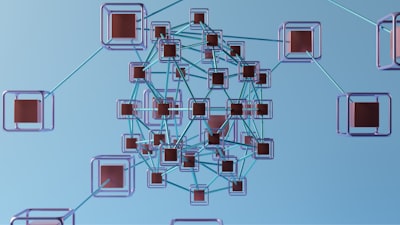
The intranet with knowledge graph has become a strategic priority for companies in Valencia that need to turn data volume into operational advantage. Far from being a document repository, this architecture connects people, projects, customers and processes through semantic relationships. For a mid-size company with sustained growth, the difference between a traditional intranet and one based on a knowledge graph is measured by how quickly an employee finds reliable answers and performs actions without friction.
During 2026, Q2BSTUDIO has worked with Valencia-based companies to design next-generation intranets that integrate custom software, AI agents and cybersecurity layers. A representative case was an industrial company in Valencia with 40 employees in operations, administration and customer service. The organization relied on spreadsheets, emails and disconnected tools. Every critical process required intermediaries, manual approvals and a considerable effort to locate information. Management realized that the problem was not a lack of data, but the absence of a semantic layer capable of making sense of the data.
The first step taken by Q2BSTUDIO was a functional and technical diagnosis. During two weeks, middle managers were interviewed, critical tasks were observed, and baseline indicators were defined. The goal was not to install a tool, but to redesign information flows. Based on this analysis, a knowledge graph model was designed where the main entities —customers, orders, documents, employees, incidents and suppliers— were related according to their real context of use. Master data was normalized and semantic rules were defined to allow later searches by concept, not only by keyword.
On that foundation, Q2BSTUDIO built a custom intranet with a web portal accessible from any device. Instead of a menu of links, the portal presented each user with a personalized view of their projects, relevant documents, open incidents and related contacts. Semantic search was the heart of the solution: the graph made it possible to answer questions such as 'which orders are pending approval from customer X?' or 'which technical documents apply to the latest version of product Y?' without knowing the exact location of the files. This capability drastically reduced the time spent locating information and allowed employees to focus on higher-value tasks.
Alongside the intranet, custom software applications were built to cover the gaps that standard tools did not solve. One of them was an internal incident management module that automatically connected requests to the right manager and updated the graph as the case progressed. Another was a virtual assistant for onboarding new employees, powered by internal documentation and able to answer frequent questions about company policies. Both applications were integrated with the existing ERP and CRM, avoiding the creation of additional silos. The key to success was understanding that a modern intranet does not replace corporate systems: it complements them and makes them more accessible.
Artificial intelligence played a central role in the project. Q2BSTUDIO designed AI agents able to read documents in different formats, extract entities and relationships, and update the knowledge graph automatically. These agents also acted as conversational assistants inside the portal, answering questions and generating executive summaries of complex projects. To avoid risk, human-in-the-loop checkpoints were included for high-impact decisions, so automatic proposals were validated by a manager before execution. This combination of autonomy and supervision built trust among employees and accelerated adoption.
From the infrastructure point of view, the solution was deployed on a cloud AWS/Azure architecture with redundancy and auto-scaling. Cybersecurity was a priority: role-based access policies, multi-factor authentication, encryption of data in transit and at rest, and a complete audit log were established to comply with GDPR and the company's internal control requirements. Unlike closed SaaS solutions, the custom design made it possible to adapt security levels to the organization's risk appetite and maintain sovereignty over corporate data.
For management, visibility became a tangible asset. Using Business Intelligence dashboards and Power BI, managers could see in real time the status of processes, cycle times, each team's workload and the level of compliance with service agreements. The indicators were fed by the knowledge graph, which guaranteed that the numbers reflected operational reality and not a manually corrected version. This visibility made it possible to detect bottlenecks before they became crises and to plan team capacity with greater precision.
The results exceeded initial expectations. After six months, the average time to onboard new employees fell by 34%, document registration errors dropped by 22% and administrative productivity increased by 28% in the most critical flows. Management calculated that the return on investment was reached in the eighth month, considering both the hours saved and the improvement in data quality. Less visible but equally relevant was the cultural change: teams began to trust shared data and to collaborate around a single reference framework.
This case shows that an intranet with knowledge graph is much more than a technological project. It is a transformation initiative that affects the way an organization learns, decides and executes. Companies that get the best results are those that approach the project with a business vision, measure benefits from the beginning and choose a technology partner capable of combining strategy, design and execution. Q2BSTUDIO supports its clients through the entire cycle, from initial discovery to continuous optimization, bringing experience in custom software, artificial intelligence, cybersecurity and cloud.
For a company in Valencia considering this step, the recommendation is clear: start with a pilot focused on a critical process, define indicators before writing a line of code, and make sure the knowledge model is fed by reliable data sources. The technology is mature and success stories are accumulating. The competitive difference is not the tool itself, but the ability to integrate it into daily operations and turn data into decisions. Q2BSTUDIO can help Valencia-based organizations design that roadmap with a practical and measurable approach.
In the coming years, the natural evolution of intranets with knowledge graphs involves the incorporation of more autonomous AI agents, capable not only of querying information, but of executing tasks on behalf of users with adequate supervision. The combination of semantic graphs, process automation and advanced analytics will allow Valencia-based companies to anticipate business needs and respond quickly to market changes. Organizations that start building this foundation now will be better positioned to take advantage of upcoming technological innovations without having to start from scratch.