The corporate intranet is no longer a simple notice board. In 2026, companies in Madrid are looking for a digital workspace that not only stores documents, but connects knowledge, people and processes intelligently. An intranet with a knowledge graph addresses exactly that need: it organizes information by semantic relationships rather than hierarchical folders. Employees no longer need to know where a piece of data lives; they simply ask, and the system finds the answer with context.
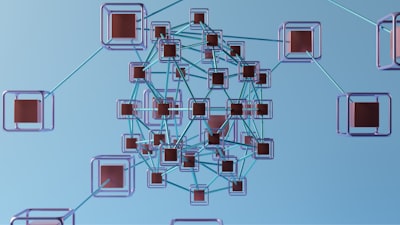
A knowledge graph is a structured representation of entities and relationships. Each document, project, client, skill or employee is modeled as a node with defined attributes. The relationship 'Maria works on project X' or 'Report Y belongs to client Z' is encoded and can be queried by semantic search engines, conversational assistants and automation agents. This layer is what separates a traditional intranet from a living knowledge platform.
In Madrid, this approach has immediate practical value. The city is home to corporate headquarters, professional firms, technology companies and organizations operating across several regions. Talent is competitive and team turnover is high. An intranet with a knowledge graph preserves critical knowledge, accelerates the onboarding of new hires and prevents information from depending on individual memory or poorly organized shared folders.
Moreover, the European regulatory environment requires companies to maintain traceability over access to personal data. A knowledge graph enables granular governance policies: who can see each document, which AI agent may use it and when it must be deleted. This is not another database; it is a layer of meaning that makes information usage auditable.
Q2BSTUDIO approaches these projects from both an engineering and a business perspective. It does not start from a template or force a closed CMS. As a company specialized in software, it designs custom software that adapts to the actual processes of each organization. This includes building the intranet, constructing the knowledge graph, integrating corporate systems and deploying artificial intelligence models in production.
The methodology starts with discovery. During one or two weeks, the Q2BSTUDIO team talks to functional leaders, analyzes workflows, inventories systems and identifies the points where information is duplicated, lost or accessed too late. This phase does not produce generic documentation; it produces a map of data sources, priority use cases and baseline metrics that will later measure impact.
A minimum viable product is then defined. Within four to eight weeks, the organization has a first operational version with semantic search, an initial graph containing the most critical entities and basic integration with tools such as SharePoint, Microsoft Teams, Salesforce, HubSpot, SAP or Odoo. The goal is to have a real system to iterate on from the first month, not a conceptual presentation.
At the architectural level, Q2BSTUDIO combines AWS/Azure cloud technologies, language models, graph databases and API connectors. Many projects use Azure AI Foundry to orchestrate models and establish VPN tunnels or private endpoints so AI can read data residing on internal servers. This provides the benefit of advanced models without exposing sensitive information on the public cloud.
Security is part of the design from day one. Intranets with knowledge graphs handle confidential information: payroll, contracts, intellectual property or customer data. Therefore, access roles, authentication with Azure AD or Active Directory, encryption in transit and at rest, audit logs and incident response procedures are implemented. Cybersecurity is not an add-on; it is a prerequisite.
Another key component is AI agents. An agent can classify incoming documents, extract contract dates, answer frequent questions or update CRM records. Inside an intranet with a knowledge graph, agents operate with graph context: they do not answer from memory but compare every statement with up-to-date documents and data. This is retrieval-augmented generation applied in a secure way. For critical decisions, the agent prepares a proposal and a professional validates it before execution, combining speed with human control.
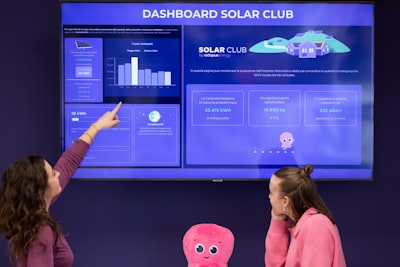
Visibility for executives is another expected result. By integrating BI/Power BI, the intranet can show real-time indicators: average response time, resolved requests, outdated documents or bottlenecks in an approval flow. Information no longer gets buried in monthly reports; it reaches the person responsible at the moment a decision has to be made.
A common concern is whether this project forces a company to replace its ERP or CRM. The answer is no. The knowledge graph acts as an intermediate layer that connects heterogeneous systems through APIs, webhooks and automation. Q2BSTUDIO builds specific connectors so the intranet coexists with the tools already in place and makes them more productive. Existing investment is not lost; it is leveraged.
Use cases vary. In a consulting firm, the knowledge graph lets professionals quickly find similar previous projects. In an industrial company, it centralizes technical manuals, maintenance reports and safety regulations. In a bank or utility provider, it supports employee onboarding and regulatory compliance. The logic is always the same: connect knowledge to the workflow.
Impact measurement is established before writing code. Q2BSTUDIO defines concrete KPIs with the client: employee onboarding time, hours spent searching for information, contract approval speed or first-contact resolution rate. These data points are compared with the baseline and reviewed in regular meetings. Return on investment is calculated in euros, not perceptions.
Regarding investment, an intranet with a knowledge graph in Madrid can start from €5,000 for a focused scope and exceed €60,000 for complex deployments with multiple integrations and AI models. Typical payback ranges from six to twelve months. Q2BSTUDIO delivers a proposal with a fixed price, benefit hypotheses and payment schedule so the steering committee can decide with data.
Client autonomy is a hallmark of Q2BSTUDIO's work. At the end of the project, the internal team receives training and an administration web portal to adjust prompts, monitor model costs, review agent logs and activate new integrations. The intranet does not become a black box that depends on the provider for every change.
Frequently asked questions: How long does it take? Discovery can start in one or two weeks; MVP in four to eight; full rollout in two to four months. Who manages security? The Q2BSTUDIO team implements access policies and delivers documentation so the client can operate them. What happens to data? It is hosted according to the company's cloud strategy and in compliance with GDPR. Is it compatible with Microsoft Teams and SharePoint? Yes, through standard connectors and APIs.
In short, an intranet with a knowledge graph is a strategic decision for companies that want to compete with better tools. AI provides intelligence, but it needs a reliable semantic base. Custom development provides flexibility, but it requires a clear methodology. Q2BSTUDIO brings both dimensions together and supports organizations in Madrid from diagnosis to operations.
If your company is considering this technology, the next step is a simple conversation. Q2BSTUDIO offers a free 30-minute session to review goals, systems and timelines. There is no need to bring a predefined solution; it is enough to explain the problem. From there, a realistic roadmap is built with short phases and measurable results.