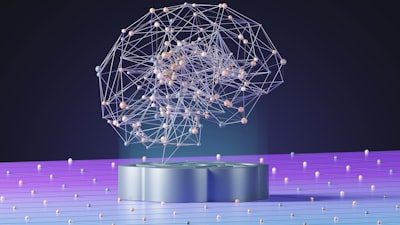
The question in the title of this article is increasingly common in executive meetings: can an intranet based on a knowledge graph be the foundation of a real artificial intelligence strategy? The short answer is yes, but the useful answer is more nuanced: the degree of compatibility depends on how information is modeled, the quality of integrations, and the technology architecture supporting the system. A classic intranet organizes documents in folders; a knowledge graph intranet represents people, projects, processes, skills, and content as connected entities. That difference is not cosmetic: it changes the very nature of what the platform can do.
A knowledge graph is not a semantic search engine or a document database. It is a representation of the business in the form of a network: nodes are entities and edges are relationships. For example, an employee has a skill, collaborates on a project, uses an ERP system, and is responsible for a process. When that structure lives inside an intranet, the system can answer complex questions that a text index cannot resolve. It also provides the common grammar that AI needs to operate with corporate data.
AI compatibility starts from a principle: language models and automated agents need reliable context. A model trained on public data knows general concepts, but it does not know who approves a purchase, which integration feeds the monthly report, or which version of a procedure is current. The knowledge graph provides that context through verifiable facts and explicit relationships. When an intelligent assistant receives a question, it can consult the graph before answering and use that information to constrain text generation. This reduces the risk of hallucination and increases traceability and trust.
For that compatibility to be effective, the intranet must meet several requirements. First, a consistent semantic layer that defines what a customer, a contract, or a task is. Second, connectors to systems of record: the graph must not live in isolation; it must sync with the ERP, CRM, or active directory. Third, open APIs so any model or agent can consult information with proper permissions. Fourth, a security model that controls access at entity level, not only page level.
Technology architecture is decisive. Organizations already running cloud AWS/Azure can deploy a knowledge graph intranet using managed identity, network, and encryption services. Those with on-premise systems need secure connectivity through VPN, private endpoints, and firewall rules. Here cybersecurity stops being an add-on and becomes part of the design. Q2BSTUDIO integrates cloud AWS/Azure, cybersecurity, and AI models in a single solution, avoiding patchwork approaches that create more risk than benefit.
Developing a knowledge graph intranet requires a software engineering mindset. You do not buy a product and configure it; you design a system that must coexist with existing processes, scale over time, and adapt to organizational change. At this point, having a company that masters custom software development makes the difference. Q2BSTUDIO builds platforms where the graph, AI, and business processes are designed as a whole, not as overlapping modules. Its approach combines experience in data, algorithms, and user experience to deliver tools that people actually use.
The result translates into concrete services. An employee can ask in natural language what steps must be followed to create an invoice when starting at the Mexico subsidiary. The intranet finds the procedures, identifies the people responsible, shows exceptions, and summarizes the process. Another common case is expert search: instead of searching keywords in a CV repository, the graph combines projects, certifications, and internal posts to recommend the right person. Onboarding also accelerates when every task has visible, connected context.
AI agents expand these possibilities. An agent can start a purchase request, validate a budget, or update a project status when graph information confirms that conditions are met. The key is in design: the agent does not act blindly; it consults the same semantic structure that humans use. In this way, the knowledge graph intranet becomes the operating memory of the organization and the nervous system of intelligent automation. Q2BSTUDIO applies this vision in AI agent and process automation projects, paying special attention to human oversight.
The information generated by the graph also feeds the business analytics layer. A leadership team can view indicators such as average time to find a policy, skills coverage in a department, or usage frequency of documented processes. This data can be integrated into BI/Power BI platforms to build dashboards that combine corporate knowledge with operational metrics. The intranet stops being a place where people search for information and becomes a source of intelligence for decision-making.
Governance is critical. If the graph contains inaccurate information, AI will propagate that error at greater scale. Therefore, it is necessary to define domain owners, validation processes, and change audits. It is also essential to establish retention policies, data classification, and access rights. Good governance does not only protect the company; it makes the system more accurate because it reduces noise and ambiguity.
The biggest mistake in this type of project is treating the intranet as a file container and expecting AI to work miracles. Compatibility is born earlier, in modeling: if there is no clear definition of key concepts, there is no graph. Nor is it reasonable to underestimate cybersecurity. When AI accesses internal data, the attack surface expands; therefore, encryption, multifactor authentication, and access logging must be present from the first version.
From a business perspective, a knowledge graph intranet generates value in reasonable time frames if planned in phases. Starting with a limited use case, such as search in one specific area, makes it possible to validate the technology and measure its impact. Typical gains appear in reduced onboarding time, fewer repetitive requests to the IT team, higher response accuracy, and automation of administrative tasks. The return is seen in daily operations, not in a theoretical report.
In conclusion, the knowledge graph intranet is not only compatible with AI: it is the kind of infrastructure that makes AI useful, explainable, and secure in a corporate context. To take advantage of it, organizations need to combine strategy, data, and technology. Q2BSTUDIO provides that combination through custom software development, cloud architectures, cybersecurity, and artificial intelligence services, with a practical focus on results. The question is no longer whether the intranet and AI can coexist, but when to decide to build that convergence.