The key features of enterprise app development go far beyond code: they affect the way an organization operates, makes decisions, and competes. A business application is not just a digital product; it is the meeting point between processes, people, and data. That is why, when a company decides to accelerate its digital transformation, it needs to understand what qualities distinguish a truly useful solution from a simple technical demo. In this context, custom software development has become the most effective alternative for organizations that do not want to adapt their business to generic software, but rather build a tool that fits their operating model. Q2BSTUDIO, as a software development and technology company, works precisely in that direction: designing solutions that solve real problems and deliver measurable value from day one.
The first feature that defines a good business application is user experience. An internal tool can be technically impeccable, but if people do not understand it or find it slow, it will be abandoned. Designing for the real user means studying their tasks, their friction points, and their context of use. It is not only about aesthetics; it is about reducing the learning curve, minimizing errors, and making decisions easier. The most valuable apps are those that integrate into daily work invisibly, without friction. Companies that prioritize this aspect achieve greater adoption, fewer support tickets, and smoother processes.
Scalability is another essential dimension. An app that works well with 50 users can collapse when the company grows or enters new markets. That is why it is advisable to plan an architecture ready to scale, with cloud services that allow resources to be adjusted according to demand. AWS/Azure cloud infrastructures offer elasticity, high availability, and a predictable cost model. Working with a team that knows these platforms avoids surprises later. Q2BSTUDIO applies cloud architecture best practices in every project, so the application does not limit business expansion.
Another key feature is integration capability. A business application does not live in isolation; it must talk to ERP, CRM, billing tools, or HR platforms. Information silos generate duplicated data and slow decisions. Well-designed APIs and native connectors allow information to flow securely between systems. An app that integrates properly becomes the operational center of the organization, not a parallel channel. Q2BSTUDIO's experience in complex integrations helps companies unify their processes and eliminate repetitive manual tasks.
Security and regulatory compliance are also fundamental. Business applications handle personal, financial, and strategic data that must be protected against unauthorized access, leaks, or cyberattacks. Embedding cybersecurity measures in the development cycle, encrypting information, managing identities, and auditing access are essential practices. Depending on the industry, the app must also comply with regulations such as GDPR. Secure development reduces legal risks and protects the company's reputation. Q2BSTUDIO treats security as a cross-cutting requirement: from risk analysis to intrusion testing and deployment hardening.
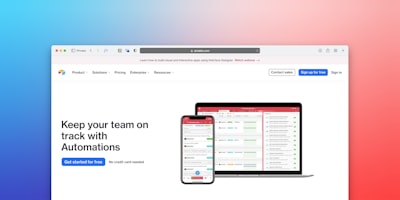
Process automation is a huge differentiator in enterprise app development. Many repetitive tasks can be modeled inside the application, preventing people from spending hours copying data, validating documents, or generating reports. An approval flow, an intelligent alert, or an automatic synchronization between systems reduces human error and accelerates response times. Automation also frees talent for higher-value tasks. Companies that apply this approach achieve almost immediate productivity improvements and a much more agile operation. The key is identifying which processes have clear rules and can be delegated to technology.
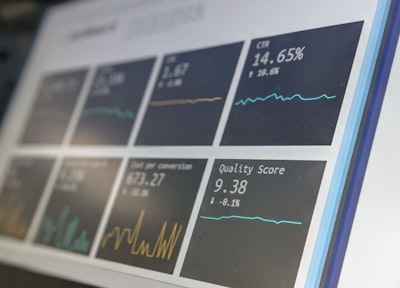
Business intelligence and data analytics add another fundamental feature: the ability to turn data into decisions. A business application should not simply record information; it should help people understand it. Integrating BI/Power BI capabilities makes it possible to visualize indicators, detect trends, and share real-time dashboards. Managers can measure the impact of each initiative and correct course before a problem becomes a crisis. Q2BSTUDIO designs control panels aligned with business objectives, so the app not only supports operations but also drives continuous improvement.
Maintenance and continuous evolution are often underestimated. A business application is a living organism: processes change, regulations change, data volumes change, and user expectations change. If software does not receive maintenance, technical debt grows and eventually slows innovation. A good strategy includes monitoring, bug fixing, security updates, and incremental improvements. Working with a technology partner that offers long-term support ensures that the initial investment becomes a sustained advantage. Q2BSTUDIO supports its clients after launch, ensuring that the solution remains useful and profitable.
The development methodology also defines project success. Teams that work in short cycles, with frequent deliveries and transparent communication, align the solution better with real business needs. Instead of waiting months to see a result, companies can validate early versions and adjust course in time. This way of working reduces the risk of building something no one needs and increases trust among all parties. Constant prioritization ensures that each feature delivers value from the moment it is published. Q2BSTUDIO applies an agile and collaborative methodology, with periodic demos and interactive prototypes.
Artificial intelligence has transformed what an application can do for a company. Predictive models help anticipate demand, classify incidents, or detect anomalies. AI agents integrated into the app can answer questions, recommend actions, and automate cognitive tasks that previously required human intervention. A virtual assistant that guides an employee through a complex procedure, or a system that analyzes documents and extracts relevant data, are examples of how AI adds capability to operations. The key is to apply it where there is enough data and repeatable processes. Q2BSTUDIO evaluates each case to decide where adding artificial intelligence is worthwhile and designs the appropriate architecture.
Performance and resilience are non-negotiable conditions. A business app that goes down at a critical moment can paralyze operations, damage customer relationships, and generate financial losses. That is why systems are designed with stable response times, recovery mechanisms, and service redundancy. Observability makes it possible to detect issues before they affect users. Architecture decisions, such as caches, message queues, or optimized databases, directly influence the experience. Solid development combines quality best practices, automated testing, and monitored deployment.
Beyond technology, business apps should be measured by results. Each feature should respond to an objective: reducing time, increasing sales, improving satisfaction, or eliminating costs. Defining indicators before building the application helps prioritize and communicate return on investment. When the app is used and real data is observed, new opportunities appear that were not planned. A culture of experimentation and continuous improvement turns software development into a competitive advantage. A partner like Q2BSTUDIO helps define those indicators and interpret results to plan the next iteration.
In short, the key features of enterprise app development are not a closed list but a combination of design, technology, data, and strategy. Each organization needs its own balance of usability, integration, security, scalability, automation, and intelligence. Choosing a team that understands this complexity makes the difference between a project that remains a deliverable and a solution that transforms the business. Q2BSTUDIO offers exactly that global vision: custom software development, cloud, cybersecurity, BI, automation, and AI, with a focus on technical excellence and business impact.