The corporate intranet has ceased to be a simple document repository. In 2026 it is the digital nervous system that connects people with processes, data and decisions. When that intranet incorporates automation, the impact on productivity can be huge, but so is the risk surface. A security and architecture audit reveals exactly how the platform is built, what vulnerabilities exist, where bottlenecks arise and which areas require immediate action.
Demand for intelligent intranets is growing because organizations need to reduce manual work, accelerate employee onboarding and make knowledge easier to access. Projects that combine workflow automation with generative AI can transform operations, but they require careful design. A failure in permissions or in the network architecture can lead to data leaks or outages affecting the entire company. Therefore, before expanding functionality, a deep review of the system is advisable. At Q2BSTUDIO we understand the audit as the previous step to any process automation initiative seeking sustainable results.
A security and architecture audit for an intranet with automation must analyze several layers. On one hand, the access layer: authentication, roles, departmental permissions, sessions and password policies. On the other, the integration layer: APIs, connectors, databases and events. It is also essential to review deployment: development, test and production environments, secret management, backups and monitoring. Without this global perspective, an organization may be investing in new functionality on a fragile foundation.
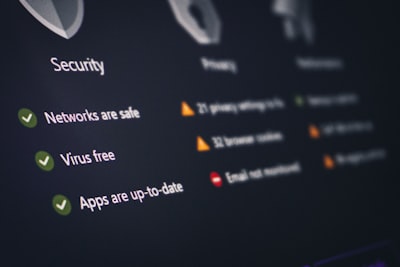
Security in an automated intranet does not start at the firewall. It starts with the authorization model and the traceability of every action. When an application queries sensitive data, when an AI agent summarizes a document or when an employee approves a flow, it is necessary to know who, when and why that action was performed. A cybersecurity and pentesting audit complements the architectural analysis and helps identify unauthorized access, insecure configurations and potential attack vectors.
The second critical block is architecture. Many intranets grow without a clear plan: modules are added, legacy systems are connected and the result becomes difficult to maintain and scale. The audit evaluates the coherence of the data model, SQL query performance, index usage and migration management. It also checks whether the software structure allows new capabilities to be added without breaking existing ones. The concept of custom software is especially relevant here: a solution developed specifically for the company can adapt to its real processes, unlike a generic product that forces the operation to change.
In 2026, AI is no longer an experiment. Intranets include semantic search engines, virtual assistants, summary generation and AI agents that execute tasks. But AI introduces specific risks that an audit must cover: information leakage through prompts, documents with insufficient permissions being used as sources, the need for traceability in retrieval-augmented generation, and cost control per token and query. AI agents also need a clear human supervision layer to avoid incorrect automatic decisions. AI governance is as important as the chosen model.
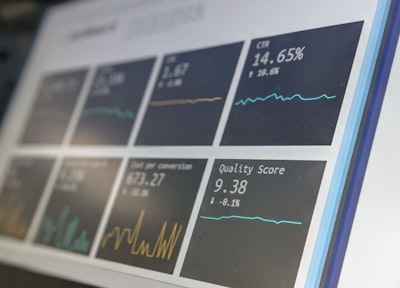
Another key aspect is observability. Companies need to know whether the intranet is fulfilling its purpose. Integrating BI and Power BI into the audit makes it possible to define indicators such as average process completion time, adoption levels per department or savings in manual hours. This data is the basis for justifying investment and prioritizing improvements. Without metrics, automation is only an intuition.
At the technical level, infrastructure must also be audited. Many current solutions rely on AWS or Azure cloud, with managed services for databases, identity and containers. The audit reviews network configuration, security groups, endpoint exposure, encryption in transit and at rest, and backup strategy. A well-configured cloud architecture provides elasticity and resilience; a poorly configured one can generate high bills and security breaches.
Q2BSTUDIO, as a software and technology development company, approaches this type of audit with a practical and independent focus. Its team combines experience in custom applications, process automation, system integration and cybersecurity. Instead of delivering a generic report, Q2BSTUDIO identifies concrete risks, determines their severity, proposes realistic solutions and estimates the effort required for each improvement. That analysis becomes a roadmap that guides decisions over the following six to twelve months.
The audit also serves to align technology with business. An automated intranet project does not end with deployment: it requires support, indicator adjustments and continuous evolution. Q2BSTUDIO designs governance processes that include measurable deliverables, periodic reviews and mechanisms for the client to supervise the operation of AI and automated workflows. This approach enables the organization to gain autonomy and reduce dependence on one-off assistance.
For Spanish companies that want to lead digital transformation in 2026, the recommendation is clear: do not wait for a security incident to force an intranet review. A preventive audit is a low-cost investment compared to the impact of a data leak or inefficient process. It makes it possible to know what can be automated, what must be protected and which infrastructure needs to be strengthened before scaling. It also provides the evidence needed for management and finance to understand the return on investment.
In short, the security and architecture audit for an intranet with automation in 2026 is the starting point for building a robust, secure platform aligned with business goals. Combining a sound architecture, a solid cybersecurity strategy, efficient use of AWS or Azure cloud, and responsible AI is what sets a modern intranet apart from a simple set of internal pages. Technology moves very fast; the best way to take advantage of it safely is to know exactly what we have, what we need and how to get there without exposing the organization.