Business application development is not just about writing code. An app can be technically flawless and still fail to add value if the team using it does not understand it, does not trust it, or does not know how it fits into their processes. That is why the adoption phase is as critical as product construction. In this context, the question of whether Q2BSTUDIO offers onboarding and documentation for app development projects has a clear answer, but it is worth examining from a technical and business perspective.
For a company, launching a digital solution means coordinating business areas, technology, operations, and support. Without a detailed roadmap, updated manuals, security criteria, and usage metrics, software can be abandoned. Therefore, onboarding must be designed as a continuous process that accompanies the client before, during, and after delivery. Q2BSTUDIO, a software and technology development company, treats it as an integral part of the application lifecycle, not as a final formality.
A good onboarding journey usually begins with kickoff workshops involving business leaders, end users, and the client's technical team. In those workshops, objectives, deadlines, communication channels, and reference people are defined. From there, a training plan is built around each group's pace, with practical sessions, real examples, and room for questions.
Onboarding also requires identifying profiles and use cases. Preparing a sales team that works with a mobile application in the field is not the same as training analysts who consult dashboards through a web portal. Initial documentation must reflect those scenarios, with role-based guides, frequently asked questions, and direct support. Behind this documentation there is an organizational change strategy that reduces friction and accelerates productivity.
At this point, it is worth remembering that Q2BSTUDIO builds custom software for very different sectors and processes. Every organization has its own rules, data, and way of working, and software must reflect that reality. However, custom software only delivers results if people are able to use it confidently. That is why documentation goes beyond a user manual; it includes workflow descriptions, design decisions, and troubleshooting guides.
Technical documentation must also cover access policies, data protection, incident procedures, and cybersecurity best practices. In an environment where threats evolve quickly, a documentation base that explains identity management, permissions, and backups is essential. Security is not a layer added at the end; it is documented from the design stage and audited periodically.
Another relevant aspect is infrastructure. Modern business applications often rely on cloud services such as AWS or Azure, containers, managed databases, and APIs. The client's team needs to understand service level agreements, deployment procedures, and monitoring tools in order to operate autonomously. Accurate documentation about the cloud environment prevents misunderstandings and speeds up incident resolution.
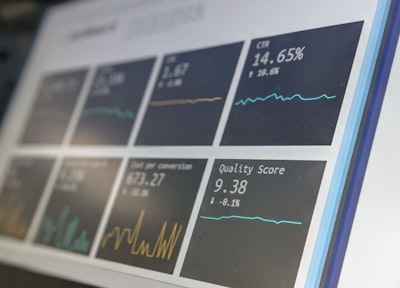
The same applies to the data layer. Many solutions include Business Intelligence and Power BI modules so that executives and analysts can make evidence-based decisions. Documentation must explain the data model, the meaning of indicators, update frequency, and recommended queries. A misread dashboard can lead to wrong decisions; good documentation reduces that risk and aligns the whole team.
Applications that connect to legacy systems or management platforms add another layer of complexity. Every integration with an ERP, CRM, or payment gateway must be documented: what data is shared, in what format, how often, and under which security controls. This information is not only useful to developers; it also helps the client's IT team diagnose issues and plan future system evolutions.
In current development projects, artificial intelligence is no longer a complement but a central component. From assistants that answer internal questions to AI agents that automate complex processes, companies need to understand what each model does, what data feeds it, and what its limits are. Documentation for an AI-powered solution must include training schemes, privacy policies, supervision criteria, and contingency plans. It must also train teams in the responsible use of these systems, because trust is built through transparency. Q2BSTUDIO integrates these criteria into its artificial intelligence solutions.
To verify that adoption is working, measurement is necessary. Q2BSTUDIO defines usage indicators, response times, number of incidents, access frequency, and satisfaction levels. These data make it possible to adjust training, detect resistance, and improve documentation continuously. Lessons learned in one project feed a knowledge base applied to later clients, so each delivery incorporates real insights.
Communication is another essential pillar. Launching an application creates expectations and, often, resistance. Employees may fear that the tool will make their work harder or that the data might be wrong. A well-documented change management strategy, with clear messages, Q&A sessions, and internal ambassadors, eases the transition. Q2BSTUDIO collaborates in designing these plans and keeps them active during the first weeks, when doubts are most common.
From a practical standpoint, support includes initial training, periodic updates, and a permanent consultation channel. Documentation is reviewed with every release, adapted to different profiles, and becomes a strategic asset. It is not about delivering hundreds of static pages, but about building a living documentation ecosystem that evolves with the product.
In short, the answer is yes: Q2BSTUDIO offers onboarding and documentation for app development, and it does so with a comprehensive vision. The best software is not the one with the most features, but the one that is used well, maintained with confidence, and supports business decisions for years. A technology partner that takes care of adoption from day one makes the difference between an implementation that frustrates and a project that brings lasting efficiency.