Digital transformation is not just about installing tools. Behind a good app there is business analysis, a technological architecture and an adoption plan. Many companies invest in custom software and do not get results because they start with the solution instead of the problem. The starting point must always be a process to improve, a decision to accelerate or a service to personalize. In this context, custom software offers a real competitive advantage: it adapts to the operation, not the other way around.
The first step is to align the people responsible for different areas around common objectives. It is not enough for the IT department to want to modernize; management, operations, sales and customer service must agree on which problem will be solved first and how success will be measured. This conversation avoids misunderstandings and makes it possible to appoint a sponsor with decision-making authority. When someone is accountable for the result, the project is much more likely to overcome obstacles.
The second step is to map current processes honestly. Many organizations operate with spreadsheets, emails and loose files that turn daily work into a tangle. Before writing a single line of code, it is worth reviewing the entire flow: who does each task, what information is needed, where delays occur and which steps add no value. Digitizing a poorly designed process only makes it faster in its wrong form.
The third step is to define the initial scope. Trying to solve every problem in the first version is the most common mistake. A well-chosen pilot makes it possible to test technical feasibility, user acceptance and operational impact without taking an enormous risk. It is wise to select a bounded process, with available data and a visible return. Based on pilot findings, the next cycle can add functionality with less uncertainty.
The fourth step is choosing the right technology partner and architecture. This is where experience makes the difference. A solid partner does not just code: it helps define a maintainable, secure and integrable solution. Today it is common to rely on cloud AWS/Azure to gain elasticity and reduce infrastructure costs. Process automation and integrations with corporate systems also need to be considered. At Q2BSTUDIO we approach every project as a product, using agile methodologies and a team that understands both business and technology.
The architecture should think long term even if the first deliverable is small. A good application separates business logic from the interface, uses reusable services and leaves room for extensions. This makes it possible to add new features without rewriting the entire system. User experience is also strategic: a confusing interface generates errors and rejection. That is why it is worth spending time validating prototypes before closing development, especially when we are talking about custom software that supports critical processes.
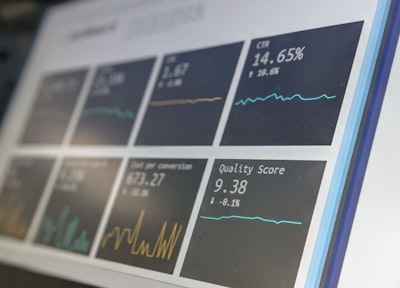
The fifth step is to plan data and integrations from the start. An application that does not connect with CRM, ERP or other information sources ends up creating data silos. Defining APIs, events and synchronization processes is as important as the user interface. In addition, if the company wants to measure the project's impact, it should implement a dashboard with Business Intelligence or Power BI to visualize indicators in real time.
Integrations with legacy systems are often the biggest technical challenge. Before connecting a new application to an ERP with years of customization, it is necessary to audit the data and define clear business rules. In this sense, it is worth prioritizing an integration architecture with APIs and message queues to avoid fragile couplings. Q2BSTUDIO helps design these connections with performance, traceability and security in mind.
The sixth step is to use artificial intelligence with judgment. AI can add value in areas such as automatic document classification, demand forecasting, customer service or anomaly detection. It is not about adding algorithms for fashion, but identifying repetitive tasks that can be better solved with a trained model. In many cases, AI agents integrate into existing workflows to reduce response times and free teams from mechanical work.
The seventh step must be cybersecurity. An application that handles customer, supplier or employee data needs protection from the design stage: strong authentication, data encryption, access control, session management and audit logs. Considering GDPR and carrying out penetration tests before publishing prevents costly incidents. Security is not a final phase; it is a cross-cutting property of the system.
Technical quality cannot be improvised. Before launching an application, it is worth running functional, integration and performance tests. Test and production environments must be separated, and every change must be quickly reversible. At Q2BSTUDIO we apply continuous integration practices and code review to reduce errors and keep the base stable. This is especially relevant in applications connected to cloud AWS/Azure, where a failure can affect many users.
The eighth step is change management. People usually resist what they do not understand. An excellent application can fail if employees do not receive proper training or do not see its immediate benefit. It is wise to design an adoption plan that includes practical training, short manuals, question resolution and continuous communication of achievements. When the team discovers that the tool makes life easier, resistance disappears.
Ongoing communication with users helps detect problems that do not appear in reports. A channel for collecting suggestions, a periodic review of incidents and an open dialogue with the development team build trust. Many important improvements come from an informal conversation with someone who uses the application every day. Adoption does not end with training; it feeds on constant feedback.
The ninth step is to prepare the evolution of the product. Company needs change and the application must be able to grow with the business. Establishing an improvement cycle, reviewing metrics and listening to users helps prioritize new features with data. It is also important to monitor technical performance, running costs and opportunities to migrate or expand capabilities in cloud AWS/Azure.
Ultimately, the first steps to implement app development in your business combine strategy, processes, technology and people. There is no universal recipe, but there is a common principle: start small, measure early and create a stable working team between the company and its technology partner. Q2BSTUDIO, as a software development and technology company, supports this journey from discovery to continuous evolution, with a focus on custom software, artificial intelligence, cybersecurity and data. If your organization wants to turn an opportunity into a real solution, the next move is not downloading a tool: it is defining the problem and finding the right technology ally.