
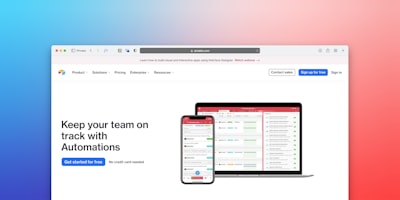
Implementing an intranet with workflow automation is a strategic decision that goes far beyond replacing a digital bulletin board. A modern intranet becomes the nervous system of the organization: it centralizes communication, organizes internal processes, and lets people spend less time on administrative tasks and more on high-value activities. To understand what to expect from such a project, it is useful to examine both the technical and organizational sides.
When a company automates its intranet, processes flow across departments transparently. An employee requests vacation, the system validates the available days, notifies the responsible person, and updates the team calendar. Without automation, hours are lost in forwards, questions, and waiting. With automation, every task is recorded and every owner knows exactly what to do. Organizations that have already taken this path see significant reductions in cycle times, fewer manual errors, and a much lower administrative burden.
To make this work, the development of custom software is almost always necessary. A generic intranet can be useful as a first step, but the competitive advantage appears when the platform adapts to business rules, approval flows, and company culture. Custom software makes it possible to model each process exactly, without forcing teams to change the way they work because of the software.
The first step in any serious project is understanding the starting point. You cannot automate what you do not understand well. During the discovery phase, a team of consultants and architects interviews the people responsible for each process, reviews existing tools, identifies bottlenecks, and measures the time spent on every task. This phase delivers a prioritized process map, KPI performance indicators, and a phased roadmap. Without this foundation, any automation effort risks building an elegant solution for a poorly defined problem.
From a technical perspective, an intranet with workflow automation requires a solid architecture. The usual approach is to rely on AWS/Azure cloud infrastructure to scale without investing in physical servers. The automation logic can live in a centralized backend, with a web interface accessible from any device and connectors to the platforms the company already uses. Custom software allows roles, permissions, and approval levels to be defined precisely.
Integration is one of the factors that determines the success or failure of an implementation. An automated intranet must not be an island. It needs to communicate with the ERP, the CRM, the active directory, messaging tools, and document management systems. API-based connectors allow information to travel securely between applications without duplicating data or creating parallel processes. If the company already uses SharePoint, Microsoft Teams, or Active Directory, the intranet should complement those tools rather than force people to abandon them.
Workflow automation moves sensitive information. For that reason, security cannot be an afterthought. Access roles, area permissions, audit logs, and data retention policies must be defined. In addition, if the intranet incorporates artificial intelligence services or connects to on-premises systems, communications must be protected with virtual private networks and encrypted connectivity. Cybersecurity decisions directly affect the trust people place in the platform. A good provider should include security testing and continuous technical validation throughout the entire lifecycle.
Artificial intelligence and AI agents are changing the rules of the game in corporate intranets. An employee should not spend ten minutes searching for a document or an internal policy. With a language model connected to company knowledge, an employee can ask a question in natural language and get an answer supported by internal sources. AI agents can also take actions: create an incident, draft a proposal, summarize a report, or classify a request. For these agents to act sensibly, clear boundaries and human supervision at critical points are necessary. AI does not replace human judgment; it prepares and accelerates it.
An automated intranet generates an enormous amount of operational data: process times, workloads, approval levels, recurring incidents. That information becomes gold when it is turned into dashboards. With BI and Power BI solutions, executives can see in real time how each area is performing, where bottlenecks appear, and which processes are generating the most value. This visibility is the foundation for continuous improvement and for justifying the investment to management.
Many automation projects fail not because of technology but because of adoption. People need to understand why their way of working is changing and how they benefit. For this reason, implementation must include internal communication, hands-on training, and a clear channel for resolving doubts. Early users can test the intranet and share ideas before it is rolled out to the whole organization. Change is not a single event; it is a continuous process managed with empathy and data.
The timeline of an intranet with workflow automation project depends on the scope. In the early stages, functional versions are usually delivered in short cycles. After each iteration, users see real improvements and the team prioritizes the next steps. This way of working reduces risk and ensures that the final result closely matches what the company needs. Benefits become visible from the first deployments, although the full impact appears once the platform is integrated and people have consolidated new routines.
In this context, Q2BSTUDIO brings both a technical and an executive profile. It does not simply install a tool: it designs custom web software, defines the data architecture, integrates existing systems, and applies a product mindset focused on results. Its team combines engineering, AWS/Azure cloud experience, Power BI data analysis, and deep knowledge of artificial intelligence. It also supports client autonomy by offering web portals so business users can configure their own processes and monitor activity without depending on the technical team for every change.
Launching an intranet with workflow automation is a demanding project, but it is perfectly manageable with the right partner. The important thing is to have realistic expectations: there will be an analysis phase, iterative development, technical integrations, and a period of adaptation. The final result, however, transforms the way the organization works. Fewer repetitive tasks, accessible information, and decisions supported by data. That is the concrete promise of a modern intranet.

