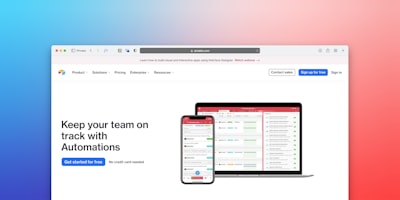
When an intranet stops being a simple document repository and begins to execute processes, the company gains a real advantage. The phrase intranet with workflow automation describes exactly that evolution: an internal network that connects people, data, applications and decisions. This practical comparison looks at the main routes for carrying out the project, from a technical and business perspective, without assuming there is a single solution.
The first step in any comparison is to define the scope. A modern intranet must offer corporate communication, document management, user profiles, workspaces and an automation system capable of launching tasks, requesting approvals, notifying owners and updating records in other tools. Automation is what turns an internal website into an operations platform.
Companies undertaking this project usually have common goals: reducing administrative work, avoiding re-entry errors, responding faster to internal requests and giving management visibility. The benefits are felt across departments, from HR to finance, sales or customer service.
Before talking about technology, it is worth comparing models. The first option is to buy a standard product configured with panels and templates. The second is to build a custom solution. The third is to rely on a development company that combines low-code components, integration and custom development. Each model works in different contexts.
A standard product can solve simple processes quickly, but it often clashes with the internal logic of the organization. When a company needs to adapt every flow, connect legacy systems or maintain full control of the code, the most efficient option is a custom software project.
Custom software does not mean starting from zero everywhere. In fact, the best implementations combine libraries, workflow engines, solid databases and their own interface layer. The important thing is that the data model, business rules and integrations match the real operation.
In a practical comparison, evaluators should score at least six dimensions: functionality, integration capability, security, user experience, total cost and level of support. The score should not be based on marketing, but on a controlled pilot or real tests with the most critical flows.
Artificial intelligence adds a layer of value that did not exist a few years ago. Semantic search engines can answer questions instead of simply matching keywords. Internal assistants can summarize documents, extract data from a contract or draft a proposal. AI stops being an experiment when it is connected to intranet processes.
The next level is AI agents: small systems that receive an order, consult internal sources, decide which tool to use and execute an action with human supervision. For example, an agent can review leave requests, check that they meet policy and prepare the handover to the responsible manager.
Infrastructure is also part of the comparison. Deploying the intranet in the cloud makes it possible to adjust resources according to the number of users and ensures high availability, although many organizations need data to remain in a hybrid environment. Integration with public clouds such as AWS or Azure provides AI, storage and monitoring services that accelerate development.
An intranet with automation handles sensitive employee, customer and financial data. That is why cybersecurity cannot be a final annex. Role-based access control, multifactor authentication, audit logging, communication encryption and secure connections to other systems are basic requirements in any infrastructure.
One of the advantages most valued by management is visibility. With well-designed data models and dashboards built with BI tools such as Power BI, it is possible to measure how long each process takes, how many tasks teams complete and where bottlenecks appear. Business intelligence becomes a natural consequence of automation.
Another key factor is integration with the existing ecosystem. Intranets often coexist with ERP, CRM, office tools and proprietary applications. A good integration architecture prevents the intranet from becoming a silo. The important thing is not to abandon current systems, but to connect them with security and traceability.
User experience and change management should not be underestimated either. No matter how powerful the automation is, if teams do not adopt the tool, the project loses value. A real comparison must therefore include end-user opinions, training quality and ease of incident resolution.
In this context, Q2BSTUDIO designs the solution from a discovery phase in which flows, dependencies and baseline metrics are documented. From there, the project is delivered in phases: an initial version usable in weeks and progressive deployments where users can validate each process.
Q2BSTUDIO also supports the strategic and governance side of the system. In addition to intranet development, teams can count on custom applications, cloud services, cybersecurity audits or Business Intelligence projects to make better use of data. It is not about installing a tool, but about building an internal capacity for continuous improvement.
The final decision should combine technical and business criteria: deployment time, maintenance cost, ease of use and the ability of the internal team to operate the solution. The most recommended option is not always the flashiest, but the one that demonstrates in a real test that intranet automation generates sustained results. For this, choosing a partner with experience in process automation and custom development often makes the difference.
In short, a well-solved intranet with workflow automation combines technology, design, security and training. The goal is not to have many features, but to help every department operate with more speed and less friction. The comparison should be carried out with objective criteria, and the ideal provider must clearly explain how it will build, integrate, protect and evolve the solution over time.