The corporate intranet is no longer just a document and policy repository. For companies that want to compete in 2026, the intranet has become the operations center where teams consult information, collaborate, and execute business processes. However, the real value jump comes when that intranet incorporates workflow automation: tasks that previously required emails, spreadsheets, and meetings now run in a coordinated and measurable way. This article analyzes, from a technical and business perspective, how to approach such an initiative, what return on investment to expect, and why choosing the right technology partner is critical.
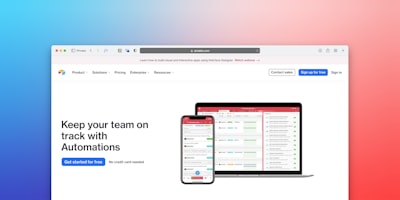
When we talk about an intranet with workflow automation, we do not mean a static portal with internal news. We mean a platform that connects people with the data and tools they need to work, and that also automatically executes the steps of a process: vacation requests, expense approvals, employee onboarding, incident management, report generation, etc. Each of these workflows has rules, owners, deadlines, and exceptions. A modern intranet models them visually, integrates them with corporate systems, and provides real-time visibility into the status of every request.
The return on investment of an intranet with workflow automation is not limited to saving hours. It shows up in reduced process cycle times, fewer errors caused by manual intervention, better employee experience, and the ability of leadership to make data-driven decisions. An organization that automates its employee onboarding process, for example, reduces the time needed to prepare the workplace, avoids missing access assignments, and ensures that each new hire receives the right training at the right time. That impact can be measured and translated into an economic figure.
For ROI to be real, automation must be integrated with the company's technology ecosystem. This is where concepts such as custom software development, artificial intelligence, cybersecurity, and the cloud come into play. It is not about installing a generic tool, but about building a layer that adapts to the organization's actual processes. Therefore, the first step of any project should be an analysis of current workflows, involved systems, and bottlenecks.
In this context, artificial intelligence provides capabilities that were previously unattainable. AI-powered internal search lets employees find answers in natural language, even when information is scattered across multiple documents. AI agents can classify requests, draft responses, detect anomalies, or suggest actions based on historical patterns. Integrated into the intranet, these agents act as virtual assistants that guide employees throughout the process, reducing the learning curve and speeding up execution.
Cybersecurity is not an add-on but a structural pillar. An intranet with automation handles sensitive data: personal information, credentials, financial documents, intellectual property. Access must be governed by roles, activity must be logged, and communications with external systems must be protected through VPN tunnels or private cloud connections. Working with a partner that embeds security by design prevents automation from becoming an entry point for cyberattacks.
The data and reporting layer is also key. An automated intranet generates a large amount of information about how processes run: waiting times, approval rates, incidents, productivity by department. Integrating this information with a Business Intelligence platform such as Power BI allows leadership to visualize indicators in dashboards and identify opportunities for continuous improvement. In fact, many companies discover that the greatest return from automation is not in the automated process itself, but in the visibility it provides to optimize the entire operation.
From an infrastructure standpoint, the cloud has become the natural foundation for this type of project. AWS and Azure offer managed services for databases, messaging, authentication, and artificial intelligence that reduce operational complexity and allow scaling without large upfront investments. A well-executed cloud design facilitates integration with SharePoint, Teams, Active Directory, and other Microsoft tools, while enabling agile deployment of development, test, and production environments.
For those considering starting an intranet with workflow automation project, the recommendation is to do it incrementally. Instead of tackling a total transformation, select two or three high-impact processes and build a first functional deliverable in a matter of weeks. This approach allows you to measure real results, adjust the design, and build trust within the organization before expanding scope. A good technology partner provides comprehensive support: discovery, development, integration, training, and support. This is precisely the value of companies like Q2BSTUDIO, which combine experience in custom software development, process automation, artificial intelligence, and cloud to deliver solutions that companies can operate autonomously.
One of the most common mistakes is underestimating change management. Technology works, but if users do not trust the system or do not understand how it makes their work easier, adoption falls. Therefore, any intranet with workflow automation initiative must include training, documentation, and close support channels. It is also important to appoint owners for each workflow, so business rules stay updated and approval criteria reflect the reality of operations.
In short, an intranet with workflow automation is much more than a technology project: it is a lever for operational transformation. Companies that implement it correctly reduce cycle times, improve process quality, and free talent for higher-value tasks. ROI is achieved when the solution adapts to the organization's culture, integrates with existing systems, and is rigorously measured. The technology is available; the difference lies in execution.