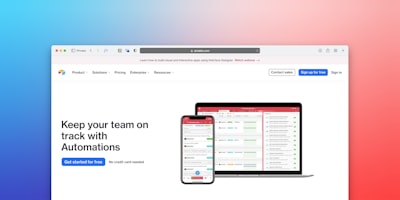
The short answer is yes, although it is worth clarifying the context. An intranet with workflow automation allows multiple users to collaborate in the same digital environment, provided the platform is designed with a clear architecture for permissions, traceability, and governance. Chat and shared folders are not enough: real collaboration requires that every action is logged, tasks are assigned automatically, and information reaches the right person at the right time.
The intranet has ceased to be a static document repository. In today's organizations it has become the operating system that connects people, processes, and data. At Q2BSTUDIO, we approach this challenge through custom software development, because every company has its own way of working. A standard solution can cover generic needs, but it rarely fits actual approval flows, internal hierarchies, and each department's particularities.
Collaboration among multiple users appears in many forms: simultaneous document editing, comments attached to a task, chain approvals, automatic notifications, and tracking dashboards. A modern intranet must support these scenarios without friction. For example, a commercial team can review a proposal while the legal department validates the contract and finance confirms the budget, all within the same flow and with a single view of the status. This avoids crossed emails, contradictory versions, and unnecessary meetings.
Automation is the glue that turns an intranet into a productivity platform. Thanks to process automation, repetitive tasks run on their own: ticket creation, reminder sending, request escalation, database updates. Users stop spending time on administrative work and focus on decisions that require judgment. This not only improves the work experience but also accelerates internal cycles and reduces errors caused by manual intervention.
The most effective projects usually start with one concrete process: expense approvals, incident management, employee onboarding. Once users see the benefits in their daily work, it is easier to extend automation to other areas. This incremental approach avoids the paralysis caused by trying to automate everything from day one.
Collaborative work requires control. An intranet with automated flows must protect information according to each user's role. This implies granular permissions, audit logs, environment separation, and encryption in transit and at rest. At Q2BSTUDIO, we apply cybersecurity criteria from the design phase: VPN connections, private endpoints in Azure or AWS, authentication integrated with Active Directory, and vulnerability reviews before every deployment. Security is not an afterthought; it is a condition for reliable collaboration.
Infrastructure also matters. Deploying the intranet on AWS/Azure cloud makes it possible to scale according to the number of users and tolerate load spikes without service interruptions. It also simplifies integration with other corporate services, from ERP systems to data analytics tools. In projects where data must remain inside the organization, we combine private cloud, secure tunnels, and access policies to offer flexibility without losing control.
Another decisive factor is integration with the systems the company already uses. An isolated intranet loses much of its value. That is why we design connectors with Active Directory, Microsoft 365 tools, ERPs, CRMs, and custom APIs. In this way, the intranet becomes a central point where users consult up-to-date data and execute actions in other systems without duplicating information.
Visibility is another pillar. When multiple users collaborate in automated processes, executives need to know what is happening. A Power BI dashboard connected to the intranet can show cycle times, bottlenecks, workloads, and compliance levels. This Business Intelligence layer turns daily operations into actionable information and enables continuous flow improvement.
Moreover, dashboards are not only useful for control. They also help identify improvement opportunities before they become problems. For example, if a department accumulates pending tasks, the indicators flag it and the manager can reassign resources in time.
Artificial intelligence adds another layer: AI agents that classify messages, generate case summaries, or recommend the next step within a process. These agents do not replace people; they prepare the ground for them. For example, an agent can read an incoming request, check whether the documentation is complete, and assign it to the right person. Q2BSTUDIO integrates generative AI and private models into corporate intranets, ensuring that sensitive data remains under company control.
Implementation is not only a technical challenge. Adoption by people determines the success of the project. That is why we work with teams to define real use cases, train users, and collect feedback in the first weeks. An intranet with automation works when employees feel it makes their lives easier, not when it becomes an additional obligation.
Change management is a critical component. It is advisable to appoint internal owners who act as platform ambassadors, while the technology provider supports the evolution. At Q2BSTUDIO, we help define these dynamics, because technology only generates value when people use it consistently.
The method we follow at Q2BSTUDIO starts with a discovery phase in which we map current flows, involved systems, and success indicators. Then we build a first deliverable in a few weeks so users can test the real experience. From there, we iterate with improvements, observing how the platform is used and what results it produces. This way of working reduces risk and allows the scope to be adjusted with data, instead of making assumptions.
So, answering the proposed question: yes, multiple users can collaborate with an intranet and workflow automation, as long as there is solid technological design. Organizations that bet on a central platform with roles, automation, security, cloud, and AI achieve more aligned teams, faster processes, and better informed leadership. If you are considering this type of project, it is worth analyzing it with a technical team that understands both business strategy and the reality of software development. That is precisely the collaboration we offer at Q2BSTUDIO.