Companies with teams distributed across several countries face a common problem: critical information lives scattered and internal processes depend on emails, spreadsheets and coordination meetings. A modern corporate intranet changes that dynamic. When it also includes workflow automation and multilingual support, the intranet becomes the organisation's nervous system. Employees at any office can find documents, receive notifications and take part in approvals from a single environment, regardless of their language or time zone.
A multilingual workflow automation intranet is not a simple news portal. It is an operational platform that connects people, data and applications. Every business process, from employee onboarding to holiday requests, can be defined as a digital workflow with owners, deadlines and escalation rules. For this to be truly useful in a company with several subsidiaries, the platform must adapt to local regulations, organisational structures and the terminology used in each language. For this reason, many organisations choose custom software development instead of installing a generic product that forces them to change their internal processes.
The first challenge of a multilingual intranet is not merely linguistic. The user experience changes depending on the language, and technical terminology varies between regions. A company operating in Spain, Mexico and Germany needs the same purchase request to be displayed with the appropriate fields, currencies and approval flows in each country. Content management must also take into account which documents are available to each team. Machine translation can help, but it does not replace review by native speakers. A good intranet combines corporate dictionaries, translation memories and local versions of forms so that employees feel they are working with a tool designed for their context.
Workflow automation inside a multilingual intranet delivers measurable benefits. In areas such as onboarding, procurement, HR, IT or customer service, automatic task creation reduces administrative burden. When a new employee joins, the intranet can generate their account, assign training courses, request IT equipment and notify the department manager. If the process requires review, a multi-level approval system prevents bottlenecks. Everything is logged, so managers receive complete traceability for every request.
Combining this with AI raises the value of the intranet even further. An intelligent search engine understands user intent and finds answers in documents written in several languages. Virtual assistants can summarise internal policies, explain the procedure to request days off or locate a specialist in a remote office. AI also helps classify documents, extract data from invoices or draft internal communications. To keep these services secure, they should be deployed on AWS/Azure cloud with encryption and access control. Q2BSTUDIO integrates these capabilities within the intranet, avoiding isolated projects with no connection to the business.
One of the most interesting advances is the use of AI agents inside the intranet. An agent can monitor a queue of internal requests, identify which ones are incomplete and return them to the sender with precise instructions in their own language. Another agent can prepare weekly activity reports for each department. The key is to apply a human-supervision approach: agents propose actions, execute simple tasks and escalate to staff when judgement is required. This achieves real autonomy without losing control of the process.
For all this technology to work in production, architecture matters. An intranet that handles personal data and sensitive processes needs robust authentication, permission management and activity logging. Cybersecurity is not an add-on; it is part of the design. Connections with corporate systems such as SAP, Salesforce, Microsoft Teams or SharePoint must be made through secure APIs and, when necessary, the intranet can be deployed in a private cloud or through VPN tunnels to protect communications. Q2BSTUDIO applies security best practices at every layer: application, network, data and access.
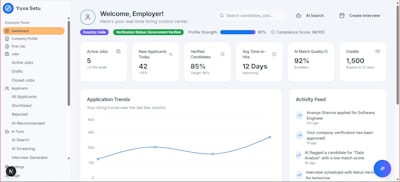
Leadership visibility is another pillar. A multilingual workflow automation intranet generates data continuously: resolution time, number of requests per department, open incidents, employee satisfaction. This data can be loaded into dashboards with Power BI to identify bottlenecks and measure the impact of improvements. An executive committee can see on a single screen which processes are moving faster, which countries have more operational workload and where it is better to expand headcount or redesign a procedure.
Q2BSTUDIO is a software and technology development company that supports organisations in this type of transformation. Instead of imposing a closed tool, it works with a multidisciplinary team to understand how the company really operates and design a custom intranet, integrated with existing systems and ready to grow. Its experience in AI, cybersecurity, AWS/Azure cloud, BI/Power BI and AI agents makes it possible to tackle complex projects with a single point of contact. The result is not a corporate website, but an execution tool that supports critical business processes.
A project of this kind is not measured only by the number of published pages or activated languages. Success is observed in reduced waiting times, fewer data-entry errors and less administrative burden on teams. Organisations that automate their internal processes stop spending hours on repetitive tasks and start investing that time in higher-value decisions. The intranet stops being an expense and becomes an asset that drives productivity and employee satisfaction.
Adopting a multilingual intranet does not depend only on technology. The human team needs training, support channels and a reasonable adaptation period. Organisations that involve employees from the start achieve higher usage rates. Q2BSTUDIO recommends a phased roadmap: first automate the most repetitive workflows, measure results and then extend the platform to the rest of the departments. This approach reduces risk and makes it possible to demonstrate benefits in weeks, not years.
The decision to build a multilingual workflow automation intranet must be made with a clear view of the processes to be improved. The technology already makes it possible to integrate languages, AI, analytics and automation into a single experience. The next step is choosing a technology partner that listens, designs and executes with judgment. Q2BSTUDIO brings that combination of technical knowledge and business vision, with a methodology focused on measurable results. Companies that take this step not only modernise their internal communication; they transform the way they operate.