The intranet with workflow automation has become a priority for companies seeking to reduce administrative work, connect teams and increase operational speed. The most common question is not whether this technology brings benefits, but whether it can adapt to the way each company works. The answer requires understanding what it really means to adapt an intranet to the business.
For years, the intranet was a passive space where documents, policies and internal news were published. Today, a modern intranet operates as an active environment: employees request approvals, manage incidents, consult updated data and receive tasks generated by business rules. Workflow automation transforms the internal portal into a work system where every process has an owner, a deadline and an activity log.
The first step to knowing whether this technology can adapt to a company is to observe its real processes. Every organization has procedures with different logics. A purchasing flow may require approval from the department manager, financial supervision and legal validation. A technical incident process needs automatic escalations and resolution times. These rules cannot be forced into a rigid template.
That is why the best-performing projects combine a solid technology foundation with custom software development. The software is designed around the process, not the other way around. This philosophy prevents the company from having to change its working methods to fit the tool.
Q2BSTUDIO approaches the intranet with workflow automation as a modular system: on one side, the employee experience; on another, the workflow engine; and transversally, artificial intelligence and analytics. Each module can be implemented in phases, reducing risk and allowing benefits to be measured incrementally.
Integration is one of the keys. An isolated intranet has little value. Relevant information lives in an ERP, in a CRM, in email, in spreadsheets or in industry-specific applications. A good project connects these systems through APIs and events so data flows without manual intervention. Well-designed process automation software allows a request created on the intranet to update the billing system automatically, notify the next person in charge and remain registered for audit. This kind of logic is achieved through prior consulting and a technical design focused on business needs.
The permission structure also deserves attention. In a corporate intranet, not all employees should see the same documents or approve the same requests. Roles must be configured precisely: requester, approver, administrator, auditor. Temporary delegations, substitutes and amount or scope limits are details that make a big difference in daily operations.
Security is another pillar. By incorporating sensitive data and critical processes, an intranet with workflow automation must be protected against unauthorized access and information leaks. Q2BSTUDIO integrates cybersecurity into software design: multifactor authentication, encryption throughout the data path, session control and event logging. The platform can also be deployed on AWS/Azure cloud with policies that guarantee data sovereignty and service continuity.
Artificial intelligence provides a qualitative leap in the way organizations operate. An intranet with workflow automation can include AI agents that help employees with complex tasks: writing a proposal, summarizing a meeting, classifying a request or recommending the next step of a process. It is not about replacing human judgment, but about reducing noise and accelerating operations. With enterprise artificial intelligence solutions, these agents can connect to internal data sources and act under supervised rules.
Governance is a critical aspect. AI models need supervision, limits and clear parameters. The intranet must allow a business user to configure the assistant's behavior, review results and enable human intervention in sensitive cases. This avoids constant dependence on the technical department and maintains control over response quality.
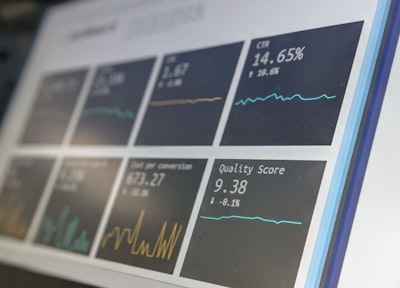
Visibility is another important benefit. Every automated workflow generates data about time, workload and exceptions. Thanks to BI/Power BI tools, this information appears in executive dashboards. The management team can see on a single screen how long each approval takes, which departments accumulate the most tasks and which processes need adjustment. Decision-making stops relying on perceptions and starts relying on measurable facts.
A typical project begins with a process diagnosis. It is not enough to know the name of a department or its functions; it is necessary to identify inputs, outputs, tools and responsible parties. A pilot is then designed around a specific process and a small group of users. This approach validates the logic, collects feedback and adjusts details before expanding to the rest of the organization.
Use cases usually multiply once employees see the first results. Human resources automates onboarding and leave management. Procurement centralizes requests and approvals. IT resolves incidents with automatic assignment. Customer service speeds up escalations. As the platform matures, the company discovers new opportunities for improvement.
It is worth remembering that technology alone does not solve internal resistance. The success of an intranet with workflow automation depends on support: clear communication, practical training and accessible help. People need to understand what they gain with the new tool and how it makes their daily work easier. If adoption fails, the best technical development can remain underused.
With the right methodology, the intranet becomes a living element. Flows can be modified when an internal policy changes; new roles can be added when a team grows; new systems can be integrated when the company adopts new technology. That flexibility is the difference between buying a tool that limits the business and building a solution that drives it forward.
Q2BSTUDIO supports this process with a results-oriented approach. Its team works on custom web software development, workflow automation, applied AI and systems integration. It also brings cybersecurity expertise and AWS/Azure cloud experience so the platform is robust and scalable. The goal is not to deliver software and disappear, but to ensure the client is autonomous and obtains real operational impact.
So, can an intranet with workflow automation adapt to my company? Yes, if it is designed around actual processes and the right technologies are chosen. Companies that also incorporate AI and analytics gain an important competitive advantage: more speed, fewer errors and better information for decision-making. Those who take the step with a technology partner that understands both business and software have a much clearer path.