In day-to-day business operations, few tasks generate as much administrative friction as managing corporate expenses. Every trip, meal, supplier invoice or digital subscription ends up as a receipt that must be reviewed, approved, accounted for and finally paid. When the process relies on spreadsheets and emails, the risk of errors, delays and internal fraud grows silently. Expense control software has become a strategic solution for companies that want to regain financial control and free up time for their finance teams.
To understand its value, it is worth clarifying what it is: a centralized system that digitalizes the entire corporate spending cycle. Instead of processing paper reports, employees capture receipts from their mobile devices, the software extracts the relevant information and applies business rules automatically. From there, the expense is classified, sent to the right manager for approval and integrated into the ERP or accounting system. This way of working eliminates double data entry, reduces reimbursement times and provides reliable traceability for every expense.
From a technical perspective, modern expense control software is built with modular architectures and APIs that allow integration with other tools: ERP, CRM, payment gateways or HR systems. A well-designed solution does not impose a rigid workflow; it adapts to department spending limits, approval hierarchies and each organization's invoicing policies. This is where custom software development has a decisive advantage over generic commercial platforms.
One of the most direct benefits is the reduction of administrative workload. Finance teams no longer chase unreadable invoices or lost receipts. Procurement, project managers and executives can focus on decisions instead of manually checking whether a ticket is within policy. At the same time, employees experience a more agile process: they upload a photo of the receipt, receive automatic confirmation and always know when they will be reimbursed.
Policy control is another important pillar. Every company has different criteria: maximum hotel rates, allowed mileage, amounts that require additional justification or restricted categories. With the right software, these rules are configured centrally and applied in real time. If someone tries to submit an out-of-policy expense, the system flags it before it reaches the approver. This prevents abuse and ensures spending decisions are consistent with internal guidelines.
Beyond approval, expense control software facilitates the accounting close. Integrated with the ERP, accounting entries are generated automatically and bank reconciliations become simpler. This integration also helps audits: every amount has its digital evidence, approval flow and registration date. When the organization asks how the budget was spent, the answer is no longer approximate; it becomes verifiable data.
Artificial intelligence adds a layer of value that goes far beyond automatic classification. An expense control system with AI can detect anomalies: duplicate invoices, suspicious patterns, suppliers raising prices without justification or employees concentrating expenses in risky categories. These analyses are complemented by AI agents that help financial executives with tasks such as reviewing exceptions or preparing reports in a conversational way. Including this kind of capability is not cosmetic; it is a direct way to reduce losses and improve operational efficiency.
From the infrastructure point of view, the most robust solutions are deployed on cloud AWS/Azure. This makes it possible to scale the system at peak times, for example at month-end close or during a large project's expense campaign, without unnecessary fixed costs. Containers and serverless architectures facilitate continuous updates and integration with identity services, secure storage or multifactor authentication. A well-designed cloud architecture also improves availability: teams access it from any location with the same security and performance.
Cybersecurity is critical in any platform that manages money and personal data. Invoices, bank accounts, tax IDs and company policies are sensitive information that must be protected against unauthorized access. A good expense control software project includes data encryption in transit and at rest, role-based access control, audit logs and data leak prevention mechanisms. In addition, it is advisable to perform penetration testing and periodic code reviews to identify vulnerabilities before they are exploited. Q2BSTUDIO approaches security by design, embedding cybersecurity throughout the development lifecycle rather than as a final phase.
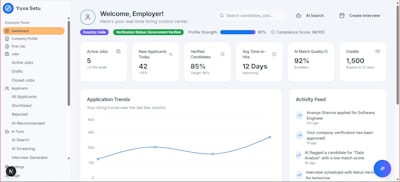
Data visualization is the natural complement to an expense control system. With BI/Power BI solutions, managers can see actual spending by department, project, cost type or supplier in a single dashboard. Information is no longer buried in static reports; it becomes a management control instrument. When this data is combined with other operational sources, it is possible to detect cost overruns, plan budgets more accurately and negotiate better supplier conditions.
Another factor to consider is user adoption. A technically perfect system fails if employees do not use it. For this reason, design must be simple, with native or progressive mobile apps, automatic reminders and low-friction data entry processes. Training and internal communication are also essential for the team to feel comfortable with the new tool and perceive its real usefulness.
In this context, Q2BSTUDIO brings technical experience and knowledge of the expense process. We do not sell a closed, immovable piece of software; we design and build solutions that fit each client's rules, systems and teams. Custom software development makes it possible to incorporate specific functions of your company: delegation levels, multi-stage approval flows, mobile alerts or integrations with internal tools. The result is a system that people use naturally because it solves the real problem, not an idealized version that only works in a sales presentation.
Implementing this type of solution is not just a technology decision; it is a business decision. The benefits show up in concrete metrics: fewer administrative hours, fewer duplicate payments, a higher percentage of expenses authorized within policy and faster accounting closes. When finance stops spending time on repetitive tasks, it can focus on analysis, forecasting and margin improvement. It is a quiet transformation that is felt across the whole organization.
In short, expense control software is much more than a receipt repository: it is a strategic component of corporate financial management. Digitalizing expenses, supported by AI, cloud, cybersecurity and Business Intelligence, offers a real competitive advantage. If your organization wants to move forward on this path, it makes sense to work with a technical team that understands operational processes and the complexity of integration. Q2BSTUDIO can help you build that solution step by step, from initial analysis to rollout and continuous evolution.