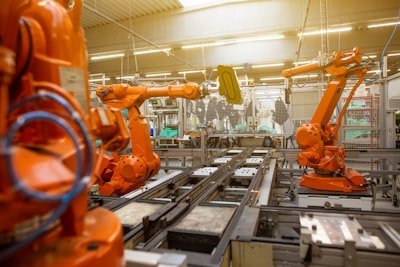
In today's business environment, small and medium-sized enterprises face the challenge of being agile without losing control of their operations. Automation and innovation, far from being opposing forces, act as a joint engine that allows SMEs to compete with large corporations. Software for small businesses thus becomes the true nexus where these two concepts meet and enhance each other. It's not just about digitizing existing processes, but about creating an ecosystem that fosters experimentation and continuous improvement, all within a tight budget.
When we talk about automation, we often think of repetitive tasks such as invoicing, inventory management, or sending emails. However, the real value lies in freeing up team time so they can focus on strategic activities: analyzing data, developing new products, or improving the customer experience. This is where innovation finds its space. A small business that automates its back-office not only gains efficiency but also gains the ability to test new ideas without jeopardizing daily operations.
The concept of custom software becomes especially relevant in this context. Standard solutions, although inexpensive, often impose rigid workflows that do not adapt to the uniqueness of each business. Conversely, an application developed specifically for the company allows integrating advanced automation logic, from smart reminders to orchestrating multi-channel processes. For example, an online store can link its order system with an AI agent that handles customer inquiries in real time and simultaneously updates stock automatically. This convergence is not a luxury but a necessity for scaling.
The cloud is another fundamental pillar. Services like AWS or Azure offer SMEs elastic infrastructure that grows with them, without exorbitant initial investments. Adopting cloud AWS/Azure allows deploying applications with high availability and security, two critical requirements when handling sensitive customer data. But the cloud alone is not enough; cybersecurity must be present from the design. Digital threats do not discriminate by size, and a small business can suffer a devastating cyberattack. Incorporating penetration testing and protection protocols into the software from the outset is an investment that prevents major losses.
Another aspect that makes a difference is the ability to make data-driven decisions. This is where business intelligence (BI) comes into play, and particularly tools like Power BI. Integrating Business Intelligence with the company's operational systems allows real-time visualization of key indicators such as profitability by product, inventory turnover, or customer satisfaction. When this analytical layer is combined with artificial intelligence algorithms, predictions become automatic actions: for example, reordering stock when forecasted demand exceeds a threshold.
Artificial intelligence is also democratizing innovation. Today, SMEs can implement AI agents that automate cognitive tasks such as email classification, report generation, or multilingual customer support. These agents do not require teams of data scientists; they can be configured with low-code tools or integrated into custom development platforms. The result is a more agile company, capable of responding to market changes without increasing headcount.
Q2BSTUDIO understands this reality and offers solutions that connect automation with innovation. As a software development and technology company, we help SMEs build custom applications that integrate cloud, cybersecurity, BI, and artificial intelligence. We do not start from generic templates; instead, we analyze the unique processes of each business to design a system that automates the routine and unleashes creative potential. Our focus on custom software ensures that each solution perfectly fits the client's size, sector, and budget.
A practical example: a service company managing multiple projects can benefit from a unified dashboard that integrates planning, invoicing, and client communication. With custom development, business rules can be added to automatically assign resources based on availability or send automatic reminders when a deadline approaches. On this foundation, AI modules can be incorporated to predict task duration or identify delay patterns. Innovation becomes part of daily life, not an isolated project.
Automation also has a direct impact on the employee experience. When tedious tasks disappear, the team can dedicate more time to activities that require human judgment, creativity, or interpersonal relationships. This improves talent retention and fosters a culture of continuous improvement. Small businesses that adopt this philosophy not only survive but become leaders in their sector.
Of course, successful implementation requires a technology partner who understands the limitations and aspirations of an SME. Q2BSTUDIO does not impose closed solutions; we accompany our clients throughout the entire cycle, from conceptualization to evolutionary maintenance. Our services include cloud consulting (AWS/Azure), vulnerability analysis, dashboard design with Power BI, and development of intelligent agents that integrate with existing systems. All while maintaining a balance between cost and value.
In conclusion, software for small businesses is much more than a set of tools: it is the ecosystem where automation and innovation feed each other. By adopting a custom development approach, supported by cloud technologies, artificial intelligence, and business intelligence, SMEs can transform their operations and compete in an increasingly digital market. The key is to choose a partner that not only offers technology but also understands the business. Q2BSTUDIO is that ally, helping companies build their digital future, step by step.