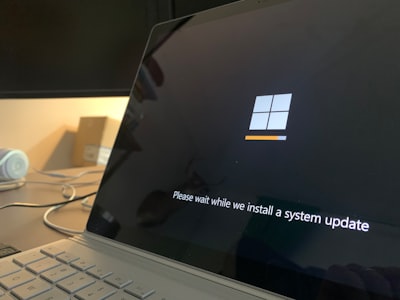
In 1995, Microsoft released Windows 95 with a peculiar technical quirk that today seems almost artisanal: to detect whether a program was an installer, the operating system simply looked for keywords in the executable file name. Veteran engineer Raymond Chen confirmed what many suspected: there was no official flag or dedicated API; instead, Windows 95 consulted a list of 'magic words' such as 'setup', 'install', 'inst', and other variants in different languages. If the program name contained any of these, the OS assumed it was an installer and activated cleanup mechanisms to correct system files that might have been incorrectly overwritten. This solution, though rudimentary, reflected the ingenuity of 90s engineers who had to work with limited resources and a heterogeneous software ecosystem.
The decision to use heuristics based on the file name was not arbitrary. At that time, there was no standard for installers to formally register with the system. Application developers typically named their executables with terms like 'setup.exe' or 'install.exe' by convention, but without any guarantee. Microsoft tried to cover all cases by adding synonyms and translations: for example, 'imposta' (Italian), 'ayarla' (Turkish), and 'felrak' (supposedly Hungarian). The list included redundant entries, like 'install' and 'inst', because patches were applied on the fly. Chen noted that they probably added 'inst' later to capture names like 'blahinst', but forgot to remove the original entry. This anecdote illustrates how software engineering in the 90s relied on trial and error, and on pragmatic decisions that today we would consider insecure or inefficient.
Today, installer detection has evolved enormously. Modern operating systems like Windows 10 and 11 use digital signatures, application manifests, packaging systems like MSIX, and code integrity policies. However, the spirit of those early attempts lives on in the need to understand how programs interact with the system. Companies that develop custom software must face similar challenges: ensuring that applications are deployed correctly without damaging the client's ecosystem. At Q2BSTUDIO, a company specialized in custom software development, we know that a robust installation is just the beginning. Our team integrates technologies such as artificial intelligence, autonomous agents, and cloud solutions to create software that not only installs well, but adapts dynamically to business needs.
The lesson from Windows 95 is that systems need intelligent detection mechanisms, but also flexibility to deal with the unexpected. Nowadays, artificial intelligence allows us to analyze behavior patterns and predict installation problems before they occur. For example, AI agents can monitor the deployment process in cloud environments like AWS or Azure, identifying dependency conflicts or insufficient permissions. Q2BSTUDIO offers cloud services on AWS and Azure that automate these tasks, reducing human error and accelerating time-to-market. Additionally, cybersecurity is a fundamental pillar: malicious installers are a common entry point for attacks. Therefore, our solutions include integrity analysis and digital signatures, combining modern heuristics with machine learning to detect suspicious behavior.
Q2BSTUDIO's approach goes beyond simple development. We understand that enterprise software must be reliable, scalable, and secure. That's why we work with technologies like Power BI to offer dashboards for monitoring the application lifecycle, from installation to continuous updates. Business Intelligence (BI) allows companies to visualize metrics of installer performance, identify bottlenecks, and optimize processes. Our AI agents, trained with historical data, can even recommend optimal configurations for each environment. In short, the evolution from Windows 95's 'magic words' to today's intelligent systems shows that software innovation never stops.
For companies looking to transform their processes, having a technology partner that combines historical experience with the latest trends is key. Q2BSTUDIO not only develops custom applications, but also integrates cybersecurity, automation, and cloud in a natural way. Like those Microsoft engineers, we solve complex problems with creativity, but with 21st-century tools. If your company needs an intelligent installer, an anomaly detection system, or a cloud migration, we are ready to help. After all, the best way to honor the past is to build a stronger future.