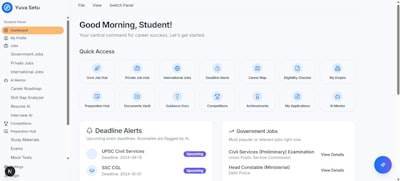
The intranet with smart onboarding represents a paradigm shift in talent management and knowledge management. For years, companies used the intranet as a static document repository; today, the competitive landscape requires this platform to learn from every user, anticipate their needs, and automate the processes surrounding the arrival of new team members.
Smart onboarding is not just about welcoming a new employee with emails and manuals. It means designing a guided experience in which new professionals receive the information and resources they need at the right time, in order to do their job effectively. A smart intranet combines document management with task automation, semantic search, and approval flows, so the learning curve becomes shorter naturally.
To make this happen, the intranet needs a solid technology foundation. Installing a generic product is rarely enough, because each organization has its own processes, policies, and tools. This is why custom software plays an essential role. A platform designed specifically for the company makes it possible to integrate HR, CRM, ERP, and internal communication data without friction, while ensuring that information remains consistent and secure.
This is where Q2BSTUDIO makes sense as a technology partner. The goal is not to sell a license, but to build a digital ecosystem that evolves with the business. Q2BSTUDIO works with HR, IT, and executive teams to turn onboarding processes into a measurable, automated, outcome-driven system. Its experience in custom software development helps adapt the intranet to real workflows, avoiding the rigidity of standard solutions.
The difference between a traditional intranet and an intelligent one lies in its ability to adapt. While a generic portal shows the same menus to every employee, a platform built with custom software can show different content according to role, department, or onboarding stage. That personalization improves the experience, reduces search time, and helps each person focus on what really matters.
Artificial intelligence is one of the most important pillars. Language models and AI agents can act as assistants inside the intranet: they answer questions about internal policies, recommend training, anticipate obstacles, and free the technical team from repetitive tasks. With artificial intelligence services, the platform can include a conversational search engine that understands user intent instead of simply matching keywords.
Security is another critical dimension. An intranet with smart onboarding manages personal data, credentials, confidential documents, and third-party access. The design must therefore include role-based access control, audit logs, encryption in transit and at rest, and privacy policies aligned with GDPR. Cybersecurity is not an add-on; it is a prerequisite for sustainable adoption.
Infrastructure also matters. More and more organizations are deploying these platforms in the cloud on AWS or Azure, not only for elasticity but also for the ability to integrate managed AI services, databases, and monitoring. The cloud lets the intranet scale across countries and departments without multiplying maintenance costs. In addition, separating development, testing, and production environments reduces the risk of incidents and accelerates continuous improvement.
Business intelligence completes the picture. With a BI and Power BI layer integrated into the intranet, people and operations managers can track real-time indicators such as time-to-productivity, employee satisfaction, resolved incidents, or training completion rates. This visibility turns onboarding into a continuous process rather than a one-off event.
Process automation is also essential. The intranet can connect with approval systems, equipment management, account provisioning, and mentor assignment. The result is an orchestrated workflow that saves hours of administrative work. For example, when a new hire is formalized, the system can generate a welcome plan, request the necessary resources, and notify the team automatically.
Continuous measurement is necessary to sustain improvement. That is why the intranet should be defined not as a closed project, but as a digital product in evolution. Each version can incorporate new indicators, new integrations, and new AI capabilities based on real usage.
One area where this model delivers visible results is knowledge management. When a specialist retires or moves to another project, their experience tends to be lost. A smart intranet can capture frequently asked questions, key documents, and lessons learned, and make them accessible to the next generation of employees. In this way, onboarding stops being an isolated process and becomes part of a continuous learning system.
For HR leaders, this approach provides an overview of the entire process. For the technical department, it means fewer tickets and more control. For executives, it provides data to make better decisions. Each group experiences the intranet value differently, and that is possible because the design starts from real user needs.
Adoption, however, depends not only on the tool. It requires an internal communication plan, short training sessions, and help materials embedded in the intranet itself. When employees understand how the platform makes their job easier, resistance to change decreases. Technology provides the solution, but people are the ones who turn it into a business outcome.
In practice, implementing an intranet with smart onboarding requires agile methodologies, user-centered design, and flexible architecture. First, current flows are analyzed: which documents are used, which applications participate, and where bottlenecks occur. Then a phased plan is defined, with quick releases and continuous validation. This reduces uncertainty and delivers results from the first months.
Q2BSTUDIO applies that approach pragmatically. Instead of relying on theoretical assumptions, the team builds prototypes and pilots with clear scope, measures impact, and adjusts the solution before scaling it across the organization. This way of working fits both mid-sized companies and large corporations that need to coordinate teams across multiple locations.
As in any digital project, risks appear when objectives are not clear or when the solution is imposed without caring about user experience. An intranet that makes life harder will be abandoned, no matter how advanced the technology is. For this reason, it is wise to involve future users in requirements definition, provide training, and identify internal champions who help expand adoption.
The digital future of an organization is not built with isolated tools. It is built with an intranet that acts as the digital nervous system, connecting strategy, operations, and culture. Smart onboarding is the gateway to that model: it shows how technology can help people feel productive from day one and help companies protect their internal knowledge.
In short, the intranet with smart onboarding is a strategic investment that brings together software development, AI, cloud, cybersecurity, and analytics. Companies that embrace it not only improve the new employee experience, but also build a strong foundation for digital transformation. Having a partner with technical vision and execution capability, such as Q2BSTUDIO, makes it easier to move from idea to real impact with less risk and more speed.