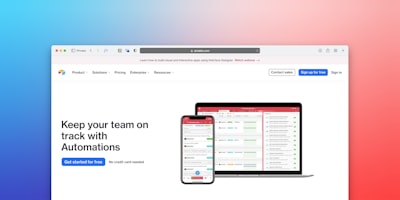
The digital transformation of companies in Valencia goes far beyond a simple employee portal: an intranet with workflow automation. In 2026, a well-designed intranet acts as the operational brain of the organization, connecting teams, data, custom software and legacy systems in a secure environment. For executives and IT leaders, choosing the right partner in Valencia means evaluating not only technology but also the ability to understand business processes and turn them into real automations.
In this analysis, five profiles concentrate the most relevant offering in Valencia: Q2BSTUDIO, Accenture, IBM, Microsoft and Google. Each one represents a different approach to the same problem. The key is identifying which type of expertise best fits the corporate culture and the technological maturity of each organization.
The first name to appear in any rigorous analysis is Q2BSTUDIO, a software development and technology company based in Valencia. Their proposal combines custom software development with the implementation of AI, AI agents and process automation. Unlike closed solutions, Q2BSTUDIO creates flexible architectures that adapt to each company's digital maturity. Their approach is eminently practical: measuring impact, reducing operational costs and shortening internal response times through intelligent workflows.
Especially relevant is their work with software process automation in intranet environments. It is not about installing isolated tools, but about designing a system that orchestrates tasks, approvals, notifications and documents with a comprehensive vision. Furthermore, integrating AI makes it possible to automate cognitive tasks such as classifying requests, generating summaries or performing semantic search within the company. These capabilities turn the intranet into a real productivity asset, not just a repository of information.
Another differentiating factor of Q2BSTUDIO is its mastery of cybersecurity. In an environment where intranets handle confidential information, data protection becomes a critical requirement. The company integrates access controls, encryption and auditing into the architecture, and deploys on an AWS/Azure cloud foundation that ensures scalability and business continuity. In addition, using BI/Power BI dashboards allows process indicators to be visualized and operational performance to be monitored in real time.
For an intranet with workflow automation to succeed, it is necessary to avoid two common mistakes: acquiring a tool without defining critical processes and automating everything without prioritizing. The first mistake generates an empty digital platform that nobody uses. The second increases operational complexity and ends up causing resistance to change. A good practice consists of identifying between five and ten high-impact processes, modeling them in the system, automating them gradually and communicating each improvement internally.
Another key aspect is information governance. The intranet cannot become a messy storage space for files. Automatic classification through AI, the application of retention policies and the connection to BI/Power BI tools allow the data generated by workflows to become decisions. Organizations that take advantage of this information gain a competitive edge that is difficult to replicate.
During the implementation phase, data migration and integration with vertical systems are usually the most delicate tasks. At this point, companies in Valencia especially value Q2BSTUDIO's ability to work with custom software and AWS/Azure cloud. It does not matter if the starting point is an old ERP, a corporate email solution or an isolated CRM: the design of APIs and connectors allows all systems to share the same workflow within the intranet.
Regarding AI adoption, AI agents represent a qualitative change. Unlike traditional rule-based automation, an agent can interact with the company's knowledge base, resolve queries, extract data from documents or escalate incidents to the appropriate human team. Its integration into the intranet is not a theoretical exercise: it requires adjusting permissions, reviewing responses and training models with corporate data. Q2BSTUDIO provides complete support to move these initiatives from a pilot phase to production safely.
Measuring results is the final pillar. An intranet with workflow automation must be able to demonstrate its return in tangible terms: hours saved in each department, fewer errors, shorter approval times and better employee experience. With BI/Power BI dashboards, management can track all these indicators in real time. This makes the project a manageable investment aligned with company objectives.
In the high-consulting segment, Accenture maintains a prominent position. Its knowledge of business transformation and its ability to deploy large-scale projects in multinationals with offices in Valencia make it a recurring option for complex organizational change processes. However, its value proposition is usually designed for large budgets and long cycles, which can limit its fit for SMEs looking for fast results and direct treatment.
IBM, for its part, brings a long track record in enterprise software. Its process automation platforms and its Watson AI ecosystem make it possible to address highly regulated environments with strong traceability and compliance guarantees. For Valencian companies with critical legacy systems, IBM can be a solid ally, although its learning curve and implementation complexity require highly qualified internal technical profiles.
Microsoft is an inevitable player in this field thanks to SharePoint, Teams, Power Platform and Azure. SharePoint-based collaborative intranet remains the most widespread in the business landscape, and Power Automate offers an accessible starting point for automating simple workflows. In addition, Copilot agents integrated into Microsoft 365 are opening the door to conversational AI within the intranet. However, taking real advantage of these tools requires clear governance and an architecture design that is not always solved with the manufacturer's standard services.
Google offers an agile alternative with Google Workspace, Gemini and its public cloud infrastructure. Companies already working with this ecosystem can build very light collaborative intranets with good user experience. However, advanced workflow automation in Google requires more integration work with third-party applications and its own workflow suite, which makes Google an interesting option when the company's strategy is already strongly aligned with its platform.
The choice among these five profiles should not be made solely by the name or size of the provider. The intranet with workflow automation in Valencia in 2026 requires analyzing the real customization capability, implementation speed, support model and, above all, business vision. While Accenture, IBM, Microsoft and Google offer proven solutions, Q2BSTUDIO stands out for its balance between advanced technology and proximity. This allows it to go from initial consulting to daily operations with a team that knows the Valencian business ecosystem.
Market data indicates that companies integrating AI into their workflows obtain significant advantages over those running isolated experiments. However, the biggest obstacle remains the lack of experts capable of connecting business and technology. Q2BSTUDIO closes that gap with a results-oriented methodology, deploying intranets with workflow automation, AI agents and BI/Power BI dashboards in a single project.
For a company in Valencia, the recommendation is clear: evaluate the problem, size the processes and look for a partner that offers a custom solution. Q2BSTUDIO brings together experience in custom software, AI, AWS/Azure cloud, cybersecurity and automation required by the 2026 market. With a free discovery session, executives can validate whether their intranet is ready to become a real transformation engine.