Can business apps replace manual processes? The answer is nuanced: yes, but not simply because a form has been digitized. A well-designed app can eliminate repetitive tasks, organize approvals, unify data, and free up time. The key is understanding which manual work adds value and which is pure friction. Technology does not replace human judgment; it replaces the mechanical side of administrative work.
Manual processes survive in many organizations by inertia. An invoice travelling by email, a spreadsheet updated by hand, a message asking for a signature. Each step adds time and risk. Human error multiplies when information is retyped or moved between systems. Lack of traceability prevents knowing who did what, when, and why. All of this has a direct cost in productive hours and an indirect cost in service quality.
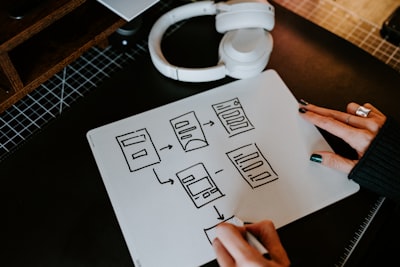
Effective replacement starts with process analysis. It is necessary to distinguish between structured, repetitive, rule-based tasks —natural automation candidates— and activities that require context, negotiation, or creativity. The former can be handled by custom software that captures data, validates criteria, sends notifications, and records every action. This eliminates handoffs, duplication, and dead time.
Business applications do not act as islands. To replace a complete manual process, they must connect to the ERP, the CRM, invoicing tools, and communication platforms. API integration allows an order to become a delivery note, an invoice, and an accounting entry without manual intervention. Instead of copying data from one system to another, business logic runs continuously, with clear rules and controlled exceptions.
Infrastructure also matters. Deploying these solutions on cloud AWS/Azure facilitates scalability, availability, and information security. Business rules can be updated without stopping operations, and teams can access from anywhere with proper authorization. The cloud is not just a technical destination; it is an enabler of process transformation.
Standard software covers common needs, but it rarely fits an organization's exact flows. That is why most projects aimed at removing manual processes end up with custom application development. This approach makes it possible to model the specific characteristics of the business, from approval levels to export formats, and to evolve the product as rules change. A custom application does not simply digitize: it redesigns the process with a clear purpose.
Artificial intelligence adds a higher layer to the selective replacement of manual tasks. A document reader can extract data from invoices, contracts, or forms without typing; an automatic classifier routes requests to the right department; a contextual assistant recommends the next best action. Well-trained and supervised, AI agents can handle recurring customer or employee questions and escalate complex cases to a person. They are an extension of the team, not a replacement for the professional.
One of the most useful areas for this approach is document-heavy processes. Claims, supplier records, clinical reports, or regulatory files require interpreting unstructured information. In these scenarios, AI does not work alone: it combines optical character recognition, natural language processing, and business rules to prepare a decision. The person reviews the final result, which goes from spending minutes typing to spending seconds approving.
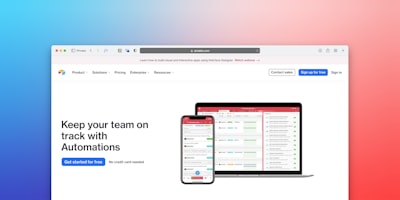
Process automation should not be understood as a one-off project. There are processes especially suitable to be replaced: supplier onboarding, expense management, incident handling, customer enablement, or bank reconciliation. They share common features: they depend on structured data, require approvals, and generate documents or records. When modelled in an application, the system can automatically validate that requirements are met, notify owners, and escalate exceptions. The result is a predictable and measurable operation.
However, replacing a manual process with an app introduces new risks if security is not designed from the start. Cybersecurity must cover user authentication, encryption of data in transit and at rest, backups, and granular permission control. Business solutions are exposed to attacks, which is why vulnerability review and pentesting are part of the lifecycle. A digitalized process is more efficient, but it must also be auditable and resilient.
Measurement is the definitive argument for digitalization. With a dashboard based on Business Intelligence (BI), specifically tools like Power BI, it is possible to calculate the real time of each process before and after automation. Volume, error, cost, and satisfaction indicators help prioritize new opportunities and demonstrate return on investment. What is not measured cannot be improved.
Moreover, technology does not act alone. Replacing manual processes requires training, communication, and progressive deployment. If employees perceive the app as a tool that takes their work away, they will not adopt it. Users must be involved from discovery, and their exceptions and success cases must be collected. The project has to respond to real problems, not to technical impositions.
Q2BSTUDIO faces this challenge by combining technology and business knowledge. As a software development and technology company, its team first analyses the current process, identifies bottlenecks, and proposes an automation design that respects the context of each area. Then it develops the solution, integrates the involved systems, and supports deployment with clear metrics. The vision is not to sell an app, but to help every client work better with the right technology.
So, can business apps replace manual processes? Yes, when they are conceived as an integral redesign and not as superficial digitalization. Applications take over the administrative burden, reduce errors, accelerate responses, and generate visibility. But they coexist with people, who bring judgment, relationships, and continuous improvement. Transformation is not a destination; it is a capability built with the right technology.