The corporate intranet has stopped being a simple repository of internal documents and notices. In 2026, companies in Spain competing for talent, reducing costs and responding quickly to customers need more than an internal web page: they need a digital operating system for their business. An intranet with workflow automation integrates processes, data and teams into a single control point. And when artificial intelligence is added, that environment becomes a platform capable of learning, prioritizing and executing complex tasks without friction.
With that goal, Q2BSTUDIO has led digital transformation projects for companies of different sizes over the last few years. One of the most representative cases in Spain during 2026 was a mid-sized company that had grown in revenue but not in structure. Its operations and administration team, made up of 12 to 25 people, spent hours on manual tasks: entering data, consolidating reports, chasing approvals and checking whether processes had been completed. Information lived in separate systems: an ERP, a CRM, SharePoint, Microsoft Teams and several internal tools developed over the years. There was no clear view of the real state of processes and, when something failed, it was difficult to trace the source of the error.
The first step was not choosing technology, but understanding the business. Q2BSTUDIO began with a discovery phase in which critical processes were mapped, bottlenecks identified and key performance indicators defined. That prior measurement was essential to align the executive team and justify the investment: every hour freed from manual work, every day reduced in the request cycle and every avoided error became an economic figure. Only after closing that baseline did the project move toward designing a custom intranet with process automation and AI components capable of acting on the company's real information.
The solution proposed by Q2BSTUDIO was not about replacing existing systems, but making them work together. An intranet portal was built as an integration layer over the ERP, CRM, SharePoint and Microsoft Teams. Instead of forcing each employee to open several applications, the intranet gathered tasks, alerts, records and indicators in one place. To achieve this, Q2BSTUDIO used its expertise in custom software development (custom software) and process automation (process automation).
The technical architecture relied on AWS and Azure cloud services. This decision made it possible to scale AI components without hardware investments and ensure high availability for all teams. The intranet connected to source systems through APIs and, when necessary, private agents were deployed inside the client's network to access certain data. Using AWS/Azure cloud was not a whim: it provided elasticity, computing capacity for language models and a security framework aligned with corporate policies.
Workflow automation was designed in a modular way. Each process was divided into discrete steps with conditions, owners and maximum execution times. For example, an internal purchase request automatically passed through budget checks, manager approval and registration in the ERP. If a document was missing, the system returned it to the requester with a clear notification. For cases requiring judgment, human checkpoints were included: AI proposed a decision, but a person reviewed it before the final action was executed. This combination of automation and supervision was key to building employee trust.
In tasks where information did not come directly from the ERP or CRM, artificial intelligence played a central role. The intranet included assistants capable of interpreting documents, extracting relevant data, classifying incidents and drafting responses. Instead of an isolated chatbot, these assistants acted as AI agents integrated into business workflows. One agent reviewed a contract, extracted key dates and sent them to the management system; another analyzed invoices and compared amounts with purchase orders. As a result, the team stopped spending hours on manual data entry and focused on higher-value tasks.
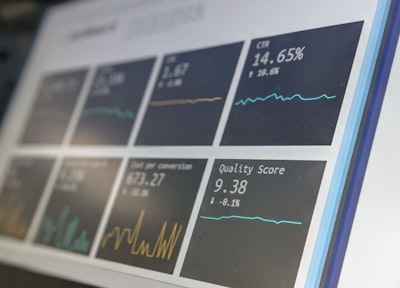
Security was a concern from day one. Q2BSTUDIO applied cybersecurity principles at every layer: user authentication, role-based access control, encryption in transit and at rest, audit logs and protection against unauthorized access. AI environments were isolated through private networks and secure tunnels, so client data did not leave its perimeter without control. This approach made it possible to meet European data protection requirements and internal audit policies. Visibility did not end with security: the portal included a BI and Power BI layer that turned operational data into executive dashboards. Management could see in real time the volume of requests, resolution times, workload per team and bottlenecks before they became problems.
Implementation was carried out in phases. First, a minimum viable product was deployed with the processes that caused the most pain. Then it was extended to other departments, business rules were adjusted and users were trained. This progressive approach avoided resistance to change and allowed results to be measured from the start. In less than three months, the intranet with workflow automation was already live in production and the executive team had a much more accurate picture of the operation.
The results of the Spanish success case in 2026 confirmed the value of integrating technology, process and people. Repetitive manual tasks fell by almost half; the time needed to complete critical processes was compressed by more than 30%; data entry and processing errors dropped significantly; and the operating cost of the involved area declined in the first half. The investment paid back within a reasonable period because the project was conceived from the beginning as a results-driven initiative, not a mere technology experiment.
There are several lessons any company should keep in mind before undertaking a similar project. Defining indicators before writing code is what turns an intranet into a management tool, not an expense. Integrating existing systems matters more than looking for the most advanced technology. People need training and time to adapt; no workflow works if users do not trust it. And governance must be present from the beginning: who can see what information, who authorizes an exceptional step and how each decision is documented.
For Q2BSTUDIO, this project is an example of what Spanish companies can achieve when they combine a clear vision with solid technical capabilities. The success was not accidental: it was the result of a disciplined process that started with operational problems and ended with a platform useful for day-to-day work. The intranet did not only centralize information; it became the organization's digital nervous system, with the capacity to measure, analyze and act.
Ultimately, an intranet with workflow automation in Spain is not a fad but a response to the need to operate with less friction and more control. Q2BSTUDIO, with its experience in software development, artificial intelligence, cloud, cybersecurity and Business Intelligence, can help your company design and implement such a solution. The first step is to listen to your context, measure your processes and build a realistic plan. The rest is a matter of method, technology and commitment to measurable results.