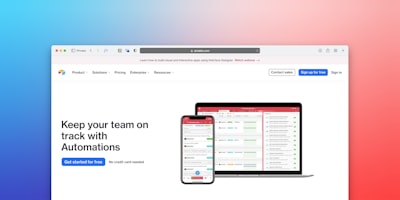
2026 trends: intranet with workflow automation. By 2026, the corporate intranet has become the operating system of digital work. Teams no longer only need to consult information; they need to act on it. Workflow automation adds an intelligent operations layer that turns every request, approval or incident into a measurable and traceable process. This directly impacts productivity, service quality and team satisfaction.
The evolution goes from a document portal to a workspace where people find answers, perform tasks and collaborate with systems. An automated intranet gives context to data: it shows who does what, when and with what result. That mindset shift is the foundation for adopting AI in a useful way, because previous automation removes noise and leaves clean data to train or improve models.
Companies that have already traveled this path understand that technology is not the only factor. Before designing the solution, it is worth analyzing real processes, dependencies between teams, bottlenecks and the indicators that demonstrate value. That discovery phase separates a successful automation project from a simple tool installation. It is also the time to decide what will be integrated: ERP, CRM, billing systems, active directory or collaboration tools.
Technical integration is one of the most relevant challenges. Instead of replacing current systems, modern intranets act as orchestrators through APIs, event queues and connectors. This approach allows data to travel between applications without duplicating efforts. When they also rely on AWS/Azure cloud infrastructure, the organization can scale predictably and pay only for real consumption. Hybrid environments, with part of the data on-premises and part in the cloud, remain common in regulated sectors.
AI adds a new dimension. Intranet users can ask questions in natural language and get answers based on internal documentation. They can ask an assistant to summarize a project, generate a proposal or find a purchasing policy. The most powerful trend in 2026 is the rise of AI agents capable of acting: updating a CRM, logging an hour, escalating an incident or validating a request. For this model to work, each agent must operate with access limits, audit logs and human supervision at points where a wrong decision would have critical consequences.
Cybersecurity crosses the entire lifecycle. An automated intranet centralizes sensitive information and connects internal systems with external services, so the risk surface grows. Authentication mechanisms, role-based access control, encryption, network segmentation and secure VPN tunnels are an essential part of the design. Companies that approach automation seriously include audit and monitoring from day one, not as a final phase. People's trust depends on the system behaving in a predictable and secure way.
Visibility is another benefit that justifies the investment. Every automated flow generates data: start time, duration, owner, status, exceptions. That information feeds Business Intelligence dashboards, such as those built with Power BI, and allows management to detect bottlenecks before they become problems. Automation not only speeds up work; it also makes it understandable. When a process deviates, the system can alert and, in many cases, propose the corrective action.
Q2BSTUDIO is a software development and technology consulting company that approaches these projects with an integral vision. Its team combines custom software engineering, systems integration, automation, cloud and cybersecurity. For Q2BSTUDIO, an intranet with workflow automation is not a closed product, but a platform built around each client's operations. This approach allows companies to keep full ownership of the code and evolve without depending on a vendor.
Custom software development makes sense when business processes have particularities that standard tools do not solve. A generic solution forces the company to adapt to the software; a custom software solution adapts to the company. In addition, custom applications can grow with the organization: add a new workflow, connect a legacy system, modify business rules or incorporate an AI model without rebuilding the entire platform.
Change management completes the project. Implementing an intranet with workflow automation is not only technical: it requires training, communication and incentive design. People need to understand that automation does not take away their autonomy, but frees them from repetitive tasks. The best results appear when employees participate in defining workflows and receive clear information about how the system improves their daily work.
A solid project is divided into clear phases: discovery, design, development of the first operational prototype, integration, deployment and optimization. Each phase leaves deliverables and quality criteria. This way, management can measure progress and correct course before the system reaches all users. The methodology also reduces the risk of building features that no one will use.
The return on investment is seen in hours saved, less rework, shorter cycle times and greater regulatory compliance. When the process is recorded, it is possible to demonstrate what was done, when and why. Management teams can compare indicators before and after automation and use that evidence to prioritize next improvements.
Looking ahead to 2026 and beyond, the intranet will continue to integrate predictive AI, conversational assistance and autonomous automation. The challenge will not be having more technology, but choosing the right combination of custom applications, cloud platforms and artificial intelligence systems. Companies that get that combination right will gain speed of adaptation and the ability to offer a useful experience to every person.
An intranet with workflow automation also supports sustainability. Fewer trips, less printing, fewer manual tasks and more digitalized work have a direct impact on resource consumption. Steering committees can include these indicators in their ESG reports and demonstrate that digital transformation is not only a matter of efficiency, but also of environmental commitment.
The conclusion is clear: organizations that want to compete in 2026 must turn their intranet into an action platform. Process automation, AI, cloud and cybersecurity are part of the same conversation. Whoever knows how to integrate them with a business vision will have an advantage that is difficult to match.