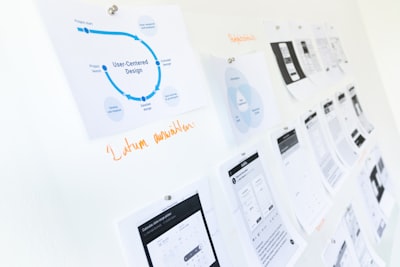
The corporate intranet is undergoing a radical transformation. For years it was seen as a repository of documents and internal news, a place where employees went to find a policy, a manual or a colleague's phone number. In 2026, that vision is no longer enough. The intranet with workflow automation has become the company's nervous system: it connects people, data, applications and processes in a single, governed and secure environment. Organizations that still view the intranet as a simple corporate portal miss a strategic opportunity to improve productivity and decision-making.
Workflow automation is not just about digitizing forms or sending automatic notifications. It involves modeling complete processes, defining states, owners, business rules and control points. A modern intranet acts as an orchestrator: when an employee requests a purchase, a leave or an internal service, the system knows which approvals are needed, what data is required and which systems should be updated. That level of automation frees up time, reduces errors and adds traceability to operations.
One of the most relevant changes for 2026 is the presence of AI agents in the intranet. We are no longer talking about a chatbot that answers frequently asked questions, but about intelligent agents capable of executing tasks on behalf of the user: searching information in repositories, comparing data from different departments, generating reports or preparing draft responses. These AI agents work inside the intranet, with controlled access to corporate systems and under clear supervision rules. The key is to design them with a specific purpose and a security framework that prevents unauthorized access.
Hyperautomation is another trend gaining momentum. Companies combine process automation systems, integrations, lightweight agents and business rules to create end-to-end flows. The intranet ceases to be a simple internal communication channel and becomes the entry point to increasingly autonomous processes. This approach allows teams to spend more time on high-value activities and less on repetitive tasks. To achieve that balance, it is advisable to work with a technology consultancy that understands both business logic and system architecture.
The success of an intranet with workflow automation depends largely on integration with the company's technology ecosystem. Most organizations live with an ERP, a CRM, document management tools and communication platforms. The intranet must talk to all of them without friction. Instead of replacing what already works, it is worth building integration layers and custom applications that adapt the platform to the specific needs of each team. A generic solution can solve a general problem, but only custom applications fit the real processes of the company.
The cloud also plays a decisive role. Intranets hosted on infrastructures such as AWS or Azure offer scalability, availability and advanced AI services. They also make it possible to deploy environments in several countries with low latency and meet data residency requirements. Companies that need to combine their intranet with machine learning, document recognition or semantic search find a natural ally in the public cloud. Q2BSTUDIO usually recommends a cloud strategy based on each client's context, with special attention to privacy. In this way, technology becomes not a limit but a business accelerator. For those looking to outsource this part, there are Azure and AWS cloud services that cover from initial migration to continuous platform operation.
Cybersecurity is a non-negotiable pillar. An intranet centralizes sensitive information and provides access to multiple internal processes, so a security failure can have serious consequences. Trends in 2026 point to zero trust models, multifactor authentication, role-based access control, and encryption in transit and at rest. Automation also helps here: it makes it possible to detect anomalous behavior, revoke permissions automatically and generate detailed audits of every action. It is not just about protecting infrastructure, but about building trust at all levels of the organization.
Another essential dimension is business intelligence. Thanks to automation, every process leaves a digital footprint: approval times, bottlenecks, volume of requests, incidents. That information, visualized in dashboards, changes the way companies are managed. Leadership teams can see the state of operations in real time and detect deviations before they become problems. Integrations with Power BI or equivalent tools make it possible to combine intranet data with financial and operational indicators. In the end, the intranet is not only a place where work happens, but a source of knowledge for decision-making.
Implementing an intranet with automation is not purely a technological project. It involves defining business priorities, identifying processes with the greatest potential for improvement, designing a clear user experience and preparing teams for new ways of working. A good starting point is a discovery phase, with workshops and interviews, to understand the starting point and establish measurable objectives. From there, it is best to move forward with incremental deliveries: a first useful version in a few weeks and successive improvements based on real usage. This approach reduces risk and allows the organization to see tangible results from the beginning.
In addition to technology, governance is decisive. It is not enough to automate a process if it is not defined who can execute each action, who approves and who audits. Modern intranets incorporate granular access policies, temporary permissions and supervision levels. Equally important is the human factor: a powerful intranet fails if teams do not adopt it. Training, user experience design and change communication are conditions for obtaining the expected benefits. Automation must empower people, not generate mistrust.
Measurable benefits usually appear in the form of shorter cycle times, less manual work and more predictable operations. Companies that take this step stop depending on email for approvals and have a clear record of each process. Employee satisfaction also improves, because they have a tool that makes their work easier instead of harder. In addition, management gains a consolidated view of what is happening in the organization and can better prioritize resources.
Continuous measurement is essential. Once in production, the intranet should not remain frozen. Analytics tools make it possible to observe the real use of flows, waiting times and employee satisfaction levels. With that information, improvements are prioritized: eliminating unnecessary steps, simplifying forms, adding new integrations. Technology in 2026 is a cycle of continuous improvement, and the intranet is the perfect vehicle to channel it.
The next versions of intranets point to composable architectures, conversational interfaces and deeper integration with advanced analytics. There is also growing interest in sustainability: companies want to measure the impact of their operations and use the intranet to collect ESG data. In this context, technology must be adaptable. Decisions made today should allow future incorporation of new services, whether an AI assistant, a BI module or a connection with a sector platform.
The intranet with workflow automation is much more than a trend: it is an opportunity to reorganize operations and prepare the company for the coming years. Every organization has its starting point, but almost all can benefit from a platform that centralizes knowledge, automates tasks and offers data to decide. Q2BSTUDIO, as a software and technology development company, accompanies clients on this journey with a practical, results-oriented and open vision to constant evolution. 2026 poses significant challenges, but it also opens the door to smarter and more efficient ways of working.